digest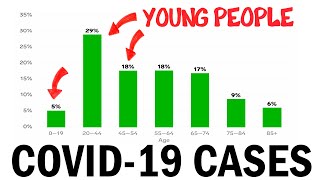
Short Summary
Main recommendation: Young people should not assume they are safe from COVID-19; the video argues that while risk rises with age, healthy young adults can still become seriously ill, be hospitalized, or die, so staying home and away from others is advised to protect yourself and others. The video frames this as a caution about overwhelmed hospitals rather than a scare tactic.
Key Points
- Mortality rises sharply with age, but a notable share of young adults still need hospital care: upwards of 20% of 20-44 year olds who got COVID-19 were hospitalized in a CDC month-long view, and up to 4% needed ICU admission.
- In an Italian study of 5,000 deaths, fewer than 5% of those who died were under 60, suggesting a small number of people under 60 die even if hospitalized, though it can still happen.
- New York data as of April 8, 2020 showed 39% of positive tests were ages 18-44, with 11% of that group (3,206 people) hospitalized and 203 deaths.
- Of the 203 deaths in 18-44 year olds in New York, 161 had underlying conditions, 16 did not, and 26 were still being reviewed.
- Even a small percentage of deaths grows in number as total infections rise, so more stories of healthy young people dying are expected.
Details Worth Noting
- Concrete instructions: The video's actionable advice is to stay home and stay away from other people to protect yourself and others, and to help avoid overwhelming hospitals.
- Virus mechanism: COVID-19 damages the alveoli (tiny lung sacs that transfer oxygen to blood), and an overactive immune response can worsen lung fluid and blockages.
- Possible explanations for young deaths: genetic differences, a gene that alters respiratory receptors, and viral load (the amount of virus infecting a person), with higher doses possibly leading to worse outcomes.
- Why older people are more vulnerable: lung and chest muscles weaken with age, the immune system slows, and conditions like diabetes and heart disease are more common.
- Children may have underdeveloped immune responses that make lung-filling overreaction less likely; in New York, two under-18 deaths both had underlying conditions. The Italian study found no deaths under 20.
- Young people can be asymptomatic or mildly ill but still transmit the virus to others, and long-term health effects were not yet understood at the time.
Bottom Line
Youth lowers the odds of dying from COVID-19 but does not remove the risk of serious illness, hospitalization, or transmission, so precautions still matter for everyone.