 digest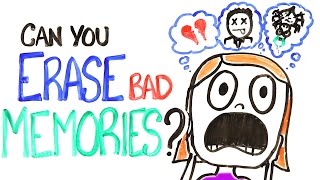
Short Summary
Main recommendation: The video does not recommend erasing bad memories; instead, it explains research suggesting that drugs which block memory-related proteins, given while a memory is being recalled, may weaken or remove that specific memory in animals. The host notes these drugs are in very early stages and ends by asking whether viewers would take a "forgetting pill" if one existed.
Key Points
- Memory is not stored in a single filing-cabinet location; the video says it is a brainwide process in which brain cells fire and build new connections.
- Proteins in the brain help form these changes, and scientists have shown that drugs blocking these proteins prevent animals from forming memories of events shortly after taking them.
- Each time a memory is recalled, it is rebuilt and can change, so the more often old memories are reflected on, the less accurate they become.
- Research on the 9/11 attacks cited in the video found that about 37% of people's recalled details had changed after one year, and nearly 50% had changed or gone missing by 2004.
- In rat experiments, giving the drug during recall of a sound linked to a shock erased the fear response to that specific sound, while the animals kept fear of other sounds.
- Scientists have found drugs targeting specific proteins in different brain regions, which could in theory target the emotional part of a memory, with possible use for post-traumatic stress disorder.
Details Worth Noting
- Concrete instructions: The video gives no actionable steps for individuals. It describes a laboratory approach only (administer a protein-inhibiting drug while a memory is being recalled), and it does not name a drug, dose, or method for people to use.
- The rat experiment used a sound followed by an electric shock; rats froze at the sound, kept that response for months, and lost it after the drug was given during recall.
- In a follow-up with two tones both paired with shocks, giving the drug while playing only one tone erased fear of that tone only, and mice remained fearful of the other.
- The video states these drugs are in very early stages and that the research is not yet a proven treatment for humans.
- The 9/11 figures come from a study of hundreds of people asked about their memories of that day, as described in the video.
Bottom Line
Targeted drug research aimed at weakening specific bad memories is promising but experimental, mostly tested in animals, and the video leaves open whether such a treatment would be ethically or practically acceptable for people.


