digest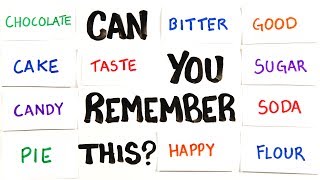
Short Summary
Main recommendation: Be skeptical of your own memory, since memories can be altered by new information, suggestion, and repeated recall, producing "false memories." The video uses a word-list test, a few famous examples, and research on eyewitness testimony and implanted childhood memories to show how easily this happens.
Key Points
- In a word-list test, most people recall "sweet" even though it was not on the list, which the video calls a false memory: a remembered event that never occurred.
- Memories form in the hippocampus, which saves them by altering neurons and creating synapses, but usually stores only major details such as time, place, and person, not minor ones like a hat's color.
- New information received between an experience and its recall can alter or replace the memory, and each recall or misremembering further cements the new version.
- In a car accident study, asking how fast cars "smashed" (versus "bumped") produced higher speed estimates and more reports of broken glass that wasn't there.
- Researchers implanted a false childhood memory of being lost in a shopping mall; 25% of subjects reported remembering that event.
Details Worth Noting
- Concrete instructions: The video gives no step-by-step method for improving memory. The only actionable takeaway is to treat recalled details, especially those influenced by others' accounts or leading questions, with caution, and to note that eyewitness accounts are less often used as evidence unless corroborated and verified.
- Examples of common false memories cited: the Monopoly man having a monocle (he doesn't), Darth Vader's line "Luke, I am your father" (he actually says "No, I am your father"), and the witch's "Mirror mirror on the wall" (the actual line is "Magic mirror on the wall").
- The stop-sign study: witnesses who were asked a question suggesting a yield sign often confirmed it was a yield sign.
- The video ends by demonstrating a false memory: asking whether the logo played at the start, when it did not.
Bottom Line
Your memory reconstructs rather than replays events, so suggestive questions, others' accounts, and repeated retelling can make confident recollections wrong.