 digest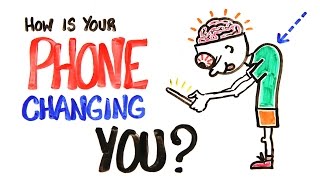
Short Summary
Main recommendation: The video describes how smartphones affect posture, eyesight, brain activity, and sleep, and notes that many successful people take 'smartphone vacations,' with Harvard Medical School advising a tech-free period before bed. The video frames this as a response to phone-driven habits like novelty-seeking, boredom avoidance, and the compulsive pull of apps.
Key Points
- Physical strain: Looking down at a phone is described as placing spine angle equivalent to an 8-year-old child sitting on your neck, and average daily phone use is cited as 4.7 hours.
- Eyesight: Combined with computer use, the video links phone and screen time to rising nearsightedness (myopia), from about one quarter of the population in the 1970s to nearly half today, and 80 to 90% in some parts of Asia.
- Compulsion loop: Apps like Candy Crush reward small goals with dopamine bursts and new content, which the video says creates a compulsion loop similar to that linked to nicotine or cocaine.
- Sleep and brain effects: Screen blue light is said to alter circadian rhythms and reduce deep sleep, and phone transmissions are described as boosting alpha wave power in the brain.
Details Worth Noting
- Concrete instructions: Harvard Medical School is cited as advising that the last 2 to 3 hours before bed be technology free, and the video suggests picking up a book instead. The video mentions that many successful people take smartphone vacations to increase productivity, and promotes a separate ASAP Thought video with six reasons to take one.
- Usage statistics: 93% of young people aged 18 to 29 reportedly use their smartphone to avoid boredom instead of reading or engaging with others, and the video introduces the term "nomophobia" for fear of being without your phone.
- Access and dependence: The video states that 7% of Americans depend entirely on smartphones for internet access, and a 2014 study found most smartphone owners use them for online banking, medical information, and job searches.
- Balance: The video acknowledges that phones are not exclusively bad and have contributed positively to the world.
- Sleep evidence: Studies cited show people reading on phones at night have more difficulty falling asleep and produce less melatonin, which regulates sleep-wake cycles.
Bottom Line
Phones offer real benefits, but the video argues their design and daily use are measurably affecting posture, vision, brain activity, and sleep, so deliberate phone-free periods are worth considering.


