digest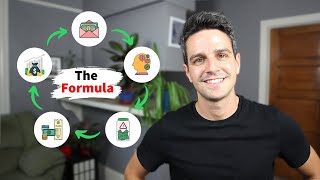
Short Summary
Main recommendation: Manage money through a five-step plan: understand why paycheck-to-paycheck living happens, adopt a frugal mindset, build an emergency fund of six to twelve months of living expenses, invest in index funds, and then expand income sources. The speaker argues this sequence makes you less dependent on any single paycheck, so you are less likely to go broke if you lose your job or face an unexpected expense.
Key Points
- The core problem is a cycle of working, spending bills and groceries first, spending the remainder on extras, and having nothing left, which the speaker says is not sustainable.
- Frugality is defined as managing money so you neither deprive yourself nor waste anything, not as pinching pennies.
- The emergency fund is funded by "paying yourself first": setting aside a fixed amount from every paycheck before any spending.
- Once the emergency fund is complete, the speaker recommends investing the surplus in index funds through a brokerage account rather than leaving it in savings, to counter inflation.
- Additional income streams, such as a side hustle like driving for Uber or running a business like a YouTube channel, are presented as a fifth step once you are less desperate for money.
Details Worth Noting
- Concrete instructions:
- Identify your fixed bills, rent, and groceries, and pay them first from each paycheck.
- Cut small wasteful spending, such as eating out less, reducing Amazon purchases, and limiting ice cream to three times a week, and redirect that money.
- Consider a smaller house or cheaper car with a lower payment to free up more money in the second round of spending.
- Before any discretionary spending, move a set amount from every paycheck into a separate savings account labeled as your emergency fund, and leave it untouched unless there is a real emergency.
- Grow the emergency fund until it covers six to twelve months of living expenses, then stop adding to it.
- Open a brokerage account and invest in index funds; the speaker says he made a separate step-by-step video on how to do this but does not give the steps in this transcript.
- The speaker cites that 58 percent of Americans are one paycheck away from disaster, though no source is given.
- Inflation is presented as the reason savings alone lose value, illustrated by rising Big Mac prices.
- The speaker says index investing is one of the only true forms of passive income, and warns against online promises of $50,000 a month in passive income.
- The speaker says the method is slow and boring and does not promise getting rich quickly.
Bottom Line
Build the buffers first (frugal spending, then a six-to-twelve-month emergency fund), and only then invest and add income sources, so that no single paycheck can sink your finances.