 digest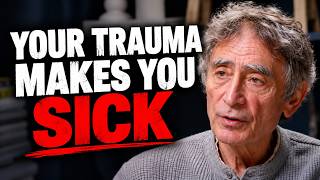
Short Summary
Main recommendation: Dealing with childhood trauma and emotional wounds, alongside medical care, is presented as a way to support physical health, since mind and body are described as one interconnected system. The speaker links trauma to conditions such as brain tumors, ALS, multiple sclerosis, ovarian cancer, and autoimmune disease, and shares an anecdote of a woman with lupus whose symptoms he says resolved after she dealt with her emotional trauma. The video frames this as both modern science and ancient wisdom, without offering a specific treatment protocol.
Key Points
- The speaker argues that emotions, the nervous system, the immune system, hormones, and the gut function as one system, not separate parts.
- Trauma is described as able to affect genetic functioning, chromosomes, and the immune system.
- A Harvard study is cited as finding women with severe PTSD have double the risk of ovarian cancer, with milder symptoms linked to lower risk.
- Autoimmune diseases are said to be more common among racialized women in Canada and the US, because they are heard less as women and as racialized people.
- The speaker gives an anecdote of a woman with systemic lupus whose symptoms are said to have disappeared after she dealt with her emotional trauma; he explicitly notes she used no medication or treatment, and acknowledges this is just an anecdote.
- The speaker notes that some doctors may not know this connection, and that it is not taught in medical school.
Details Worth Noting
- Concrete instructions: The transcript gives no step-by-step, dosage, timing, or treatment instructions. The only actionable advice is the general idea of working medically and mentally to release trauma, and dealing with the emotional side of illness and taking charge of one's life.
- The speaker says Stephen Hawking was diagnosed with ALS at age 20 and lived another 55 years, outliving his prognosis, cited as an example that doctors don't know everything about disease progression.
- The speaker describes the Indigenous medicine wheel, with four quadrants (physical, mental/emotional, social, spiritual) that must be in balance for health.
- The speaker presents the lupus case and the Hawking example as anecdotes, while acknowledging anecdotes are not proof, and says others have studied the topic systematically.
- Caveat: These are the speaker's claims and personal anecdotes, not professional medical advice. Viewers with serious conditions should consult qualified healthcare providers.
Bottom Line
The video presents a holistic view that emotional trauma and physical illness are linked, and that addressing both may matter for health, though the evidence it offers is largely anecdotal and cited studies are not fully detailed.


