digest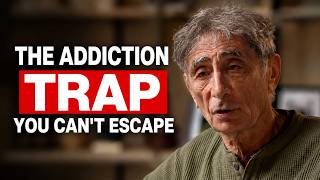
Short Summary
Main recommendation: Recognize that addiction is not a choice but an attempt to escape a deep life problem rooted in trauma, and seek support rather than waiting for a sudden personal breakthrough. Gabor Maté argues there is no "healthy addiction," since a habit that causes negative consequences and cannot be given up is an addiction, while a healthy habit is one a person can drop when it stops working.
Key Points
- Addiction is defined as any behavior that provides temporary pleasure or relief, is craved, causes long-term harm, and cannot be given up; behavior without negative consequences is a passion or habit instead.
- The word "addiction" traces back to the Roman "addictus," a debtor assigned to a creditor to work off a debt, which Maté uses to argue that addiction means being enslaved to a craving with no real free will.
- Maté's own addictions included work, pursuing success and more and more achievement, and buying classical CDs, which he says he would spend thousands of dollars a day on, lie to his wife about, and which once led him to leave a woman in labor to go buy a symphony recording.
- Addictive behavior is an escape from pain, shame, or insecurity, and the person doing it is essentially a trapped, scared person.
- Recovery is highly individual and depends on available healing resources, support, and how much the habit is costing the person's life.
- Rare spontaneous breakthroughs happen, but for most people, healing takes self-awareness, support, connection, and guidance.
Details Worth Noting
- Concrete instructions: The speaker gives no step-by-step program. The actionable guidance is to ask whether a behavior is causing negative consequences and whether you can give it up, to identify what the behavior gives you in the moment (relief, pleasure, escape), and to get help from others rather than waiting for a miraculous moment of insight.
- Maté says the "addiction" definition he uses applies to behaviors like working out or eating, not only substances, so the test is consequences and inability to stop, not the activity itself.
- In his "thousand people" thought experiment, he expects nearly everyone to identify some addiction under his definition, and suggests asking what the behavior gives them rather than only what is wrong with it.
- He says he was not using substances during his CD addiction but was chasing a dopamine "hit," and that he gave up his CD buying only after realizing the cost exceeded the benefit.
- He explicitly says he could not answer how long it typically takes someone to recognize an unhealthy habit before quitting, and that it depends on resources, support, and individual trauma.
- Trauma is described as meaning "wound" in Greek, and children who are hurt but not supported, seen, or accepted can become trapped in that wound and in the behaviors used to escape it.
Bottom Line
Addiction is best understood as a survival strategy for unhealed pain, so the path forward is compassionate self-awareness and support rather than willpower alone.