 digest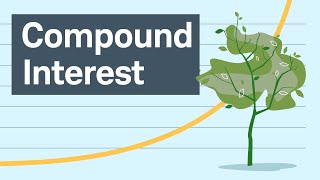
Short Summary
Main recommendation: start investing early, reinvest earnings instead of withdrawing them, and avoid excessive risk so compounding can work over a long period. The video uses hypothetical examples to show that compounding over time can produce much larger gains than simply collecting annual interest.
Key Points
- Compound interest means reinvesting earned interest back into the principal, so growth builds on previous growth.
- In the first example, two investors each start with $10,000 at 7% per year over 30 years: withdrawing interest yields $21,000 in total earnings, while reinvesting could reach about $66,123, more than triple.
- Time strongly affects results: a $100,000 portfolio with $10,000 added yearly at 7% grows to $527,193 in 15 years but $1,705,833 in 30 years, over three times as much.
- Earnings are typically capital gains and dividends, and some brokers can reinvest them automatically.
- Compounding only works if investments are earning, so avoiding large losses matters as much as earning returns.
Details Worth Noting
- Concrete instructions:
- Start investing as early as possible, since the earlier you start, the sooner you benefit from time.
- Reinvest earnings (capital gains and dividends), either by using your broker's automatic reinvestment option if available or by buying other investments.
- Avoid excessive risk that can lead to large losses, such as taking outsized risks or staying entirely on the sidelines out of fear.
- Reduce portfolio risk by allocating across different asset classes and diversifying within each asset class.
- The video stresses that diversification and asset allocation reduce risk but do not eliminate the risk of loss.
- The examples are hypothetical and assume a steady 7% annual return, which real investments do not guarantee.
- The video notes that investments sometimes make money and sometimes lose money, so consistent profit cannot be guaranteed.
Bottom Line
Long time horizons and reinvested earnings can multiply a portfolio's growth, but that advantage depends on keeping losses under control.




