 digest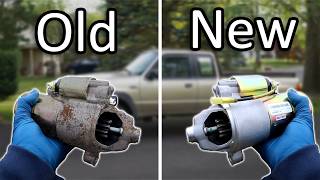
Short Summary
Main recommendation: If your car or truck won't start and you hear a single click, test the battery, terminals, anti-theft light, neutral safety switch, and fuses/starter relay first, then replace the starter only if those check out. The video demonstrates a full diagnosis path and a step-by-step starter replacement on a truck, with a free load test at a parts store recommended as an option.
Key Points
- A rapid clicking sound usually points to a dead battery rather than a bad starter; the video says to check the battery first because it is the most common cause.
- Voltage should be at least 12.2 volts; the load test (cold cranking amps) showed 831 against a rated 850, which the presenter considered good, while values near 500 to 600 would suggest a new battery.
- Corroded or loose battery terminals can block current, so clean and tighten them before condemning the starter.
- Other non-starter causes covered are the anti-theft immobilizer light (should go out after a few seconds), the Check Engine light not coming on, a neutral safety switch (or clutch safety switch on manuals), and blown fuses or a faulty starter relay.
- Hitting the starter with a hammer is an old-school trick that can temporarily get the engine started to get you home, and the presenter used it as further confirmation that the starter was bad.
Details Worth Noting
- Concrete instructions:
- Set a digital multimeter to 20 DC volts, touch the leads to the two battery posts, and aim for at least 12.2 volts; charge the battery and retry if lower.
- Use a load tester set to the battery's cold cranking amp rating (850 in the example) to check under load; many parts stores will do this free.
- Disconnect each terminal, sand the post and inside of the terminal with about 200-grit sandpaper, and make sure the connection is tight.
- Turn the key to the run position and confirm the anti-theft light goes out after a few seconds.
- Check that the Check Engine light illuminates when the key is in run.
- On automatic cars, push the shifter fully into Park or Neutral and check the neutral safety switch connector near the transmission pan; on manuals, press the clutch and check the clutch safety switch connector.
- Look up the starter relay and fuse in the owner's manual diagram, check the fuse visually, and swap the relay with a known-good one to test it.
- Replacement: disconnect the negative battery lead, remove the three starter bolts (top bolt needs a universal joint and extension, with black tape to limit its motion), note wire positions, remove the 10 mm and 12 mm nuts, then install in reverse.
- Clean wire contacts with sandpaper, coat exposed metal with silicone paste, apply removable threadlocker to bolt threads, and torque the top (hardest-to-reach) bolt to 20 ft-lbs, then torque the other two bolts as well (specific values for those two were not stated).
- Bring the old starter to the parts store (AutoZone) for a free bench test and so you can hand it over when buying the new one to avoid being overcharged.
- Some starters are reached from the top of the engine (the Jaguar example), so identify your starter's location first.
- Jack up the vehicle, place it on jack stands, and leave the jack lightly touching the frame for safety.
Bottom Line
A fast, low-cost checklist (battery, terminals, immobilizer, safety switches, fuses, relay) can rule out most no-start causes before you spend money on a starter.