 digest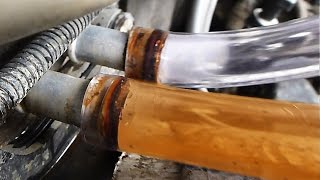
Short Summary
Main recommendation: Flush your heater core by reverse-flushing it with a garden hose, pushing clean water in through the outlet hose until clear water comes out of the inlet hose, then refilling it with the correct 50/50 antifreeze mix. The video says this can noticeably improve heat output when the heater runs lukewarm or cold even though the engine is at operating temperature. The presenter's test went from about 125°F to 150°F at the vent after the flush.
Key Points
- The reason to flush is weak cabin heat: the fan and heat are on, the engine is warm, but the vent is only lukewarm or cold.
- Reverse flushing runs water opposite to normal coolant flow, so it pushes debris out the way it came in.
- The heater core is low pressure; the presenter says the water pump supplies only about 10 PSI at most, so the water pressure must stay below that.
- Flushing removed visibly dirty fluid with small floating debris, and the presenter's vent temperature rose about 25°F afterward.
- If very little water comes out, the presenter suggests running radiator cleaner through the inlet hose, letting it soak, then flushing again.
Details Worth Noting
- Concrete instructions:
- Test first: run the engine to operating temperature with the heat and fan on high, and measure vent temperature with an instant-read thermometer (the presenter got about 125.5°F).
- Locate the two heater core hoses on the firewall, usually on the passenger side or middle. Identify the inlet hose (coolant in, typically the one with the heater control valve) and the outlet hose (coolant out).
- Work only with the engine cold. Disconnect both hoses by loosening their clamps.
- Attach a garden hose through a hardware-store adapter to a 5/8-inch clear hose. Connect it to the outlet side and run a second hose from the inlet side into a bucket.
- Turn on water at the tap carefully, keeping pressure under 10 PSI, until the discharge runs clear.
- Shut off the water, disconnect the garden hose, and pour 50/50 antifreeze (the type in the owner's manual) through a funnel into the outlet side until antifreeze comes out the inlet hose, which replaces the water.
- Reconnect the inlet and outlet hoses correctly, pushing each fully onto its fitting and resecuring the clamps.
- Recycle used coolant and keep it away from animals, which may drink it and be poisoned.
- The video's example vehicle is a Mazda B3000 / Ford Ranger; the presenter notes the heater control valve helps identify the inlet.
- A flush kit costs around $5 at hardware stores; the presenter used a standard adapter instead.
- The presenter's road test was a short drive, after which he noted the heater core wasn't even that dirty, suggesting even better results are possible for dirtier cores.
Bottom Line
Reverse flushing the heater core with a garden hose, under 10 PSI, followed by a 50/50 antifreeze refill is a low-cost way to recover heater performance when the core is clogged, and the presenter's test showed a clear temperature gain.




