digest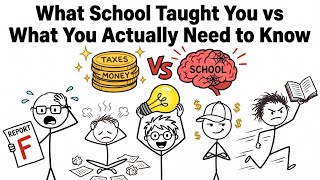
Short Summary
Main recommendation: Learn the skills schools skip—critical thinking, negotiation, personal finance, persuasion, self-directed learning, and emotional regulation—because the video frames these gaps as intentional. The speaker argues that tax complexity, low salary negotiation, and debt are sustained because they benefit institutions, and that closing these gaps is the path to financial and personal independence.
Key Points
- The tax system is framed as deliberately confusing, with the speaker claiming the IRS could pre-fill returns but that companies like Intuit and H&R Block profit from complexity.
- Failing to negotiate starting salary is presented as costly, citing a Carnegie Mellon study that negotiators earn about $7,500 more in year one, which the speaker estimates at over $600,000 over a career.
- Compound interest is described as cutting both ways, with credit card debt compounding daily and early investing outpacing late starts.
- Visibility and personal branding are presented as more important to promotion than hard work alone.
- Self-directed learning, saying no to protect time, and emotional regulation are presented as core skills that make people harder to control.
Details Worth Noting
- Concrete instructions:
- Tax: Check whether you qualify for IRS Free File (the speaker cites earning under about $79,000) and use Free File Fillable Forms, which the speaker says works for anyone regardless of income.
- Negotiation: Know your market value, be willing to walk away, and avoid naming a number first; anchor high, don't give them a number first, make them offer, and ask for more.
- Debt and investing: Avoid carrying credit card balances, and invest early and consistently; the speaker's example is $5,000 a year from age 20 to 60 reaching over $1 million by retirement, while starting at 30 requires nearly double the annual amount.
- Saying no: Audit your commitments and decline low-value requests, treating each yes to something minor as a no to something important.
- Personal branding: Document your wins and share progress (for example on LinkedIn) so decision-makers see your contributions.
- Self-directed learning: Pick one topic, find free resources, and commit to 30 minutes a day.
- Persuasion: Read Influence by Robert Cialdini and Never Split the Difference by Chris Voss, watch TED Talks, and practice with friends.
- Productivity: Audit your week, cut low-value activity, and focus on the roughly 20% of tasks that produce about 80% of results.
- Emotional regulation: Breathe deeply when overwhelmed, write down what you feel, and reframe anxiety as excitement.
- Critical thinking: Ask who benefits from a claim, why it was presented, and what evidence is missing.
- The speaker's claims about intent (schools, companies, and "the rich" deliberately keeping people uninformed) are presented as opinion and are not supported by the sources cited.
- The Carnegie Mellon and compound-interest figures are the video's own numbers and should be checked against original sources before relying on them.
- Financial tips such as tax filing and debt management are general information from the video, not professional financial or tax advice.
Bottom Line
The video's core message is that practical life skills are being undertaught and that filling those gaps yields measurable financial and personal benefits, though many of its claims about hidden motives go beyond what the evidence it presents shows.