 digest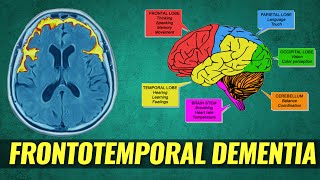
Short Summary
Main recommendation: Frontotemporal dementia (FTD) is best understood as a group of uncommon brain disorders with no cure, where treatment focuses on managing symptoms and supporting patients and families. The video explains the main FTD types, their symptoms, how doctors diagnose the condition, and the support options that can help people cope.
Key Points
- Dr. Hansen explains that FTD affects the frontal and temporal lobes, which control decision-making, emotional control, language, and social behavior, and he says it accounts for roughly 10 to 20% of all dementia cases.
- Dr. Hansen says about 30 to 50% of FTD cases involve a family history, and genes such as MAPT have been linked to abnormal protein buildup that contributes to neuron death.
- Dr. Hansen notes that behavioral variant FTD (bvFTD) is the most common type, at about 50 to 60% of cases, and it causes personality, behavior, and social-conduct changes.
- Primary progressive aphasia (PPA) affects language, splitting into semantic variant (word comprehension and object recognition problems) and non-fluent or agrammatic variant (speech production and grammar problems).
- FTD with motor neuron disease (FTD-MND) can cause muscle weakness, stiffness, speech and swallowing problems, and in severe cases breathing difficulty, with aspiration from swallowing problems being a serious risk.
Details Worth Noting
- Concrete instructions: The video gives no step-by-step treatment or preparation instructions. Its actionable advice for caregivers is to learn as much as possible about FTD, connect with friends, family, and other caregivers, join in-person or online support groups, consult neurologists, psychiatrists, therapists, and social workers, and plan early for legal, financial, and long-term care arrangements.
- Diagnosis involves a detailed medical and family history, a neurological exam of cognition, motor skills, and reflexes, neuropsychological tests covering memory, language, attention, and problem solving, and MRI or CT brain imaging to look for atrophy in the frontal and temporal lobes.
- Medications are not specifically approved for FTD, but antidepressants may be prescribed for mood swings and irritability, and antipsychotics may be used for agitation or aggression.
- Non-drug supports include speech and language therapy, occupational therapy for adapting daily tasks, physical therapy for FTD-MND, and counseling, support groups, and respite care for families.
- Dr. Hansen states average life expectancy is about 8 to 10 years after symptom onset, though some people live 20 years or more. Memory problems are usually not an early symptom, while attention, planning, organizing, and problem-solving difficulties can appear as the disease progresses.
Bottom Line
FTD is an uncommon, incurable brain disorder whose outcome depends heavily on the subtype and how well symptoms and caregiver needs are managed.




