digest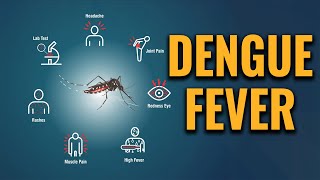
Short Summary
Main recommendation: prevent dengue fever by avoiding mosquito bites, since no specific antiviral treatment exists and symptoms are managed supportively. The video explains that dengue is spread mainly by the Aedes aegypti mosquito, can cause severe illness in a small share of cases, and is spreading to new areas of the United States, including Florida, Texas, Hawaii, and Puerto Rico.
Key Points
- Dengue is a mosquito-borne viral illness; the video also notes it is sometimes called "breakbone fever."
- Most infections are not symptomatic: of about 390 million annual infections worldwide, roughly 96 million produce symptoms (about one in four).
- Symptoms typically begin four to six days after a bite and can last up to 10 days, with high fever as the most common sign.
- Severe dengue, about one in 20 cases, can progress to dengue hemorrhagic fever or dengue shock syndrome and requires immediate medical care.
- Diagnosis uses blood tests: a PCR test for the virus if symptoms started within seven days, and a serological test for IgM antibodies after seven days.
- The Dengvaxia vaccine is FDA-approved (2019) but CDC recommends it only for children aged 9 to 16 with lab-confirmed prior infection who live in areas where dengue is common.
Details Worth Noting
- Concrete instructions:
- If you may have dengue, see a healthcare provider, who will ask about travel history and symptoms.
- If dehydrated, give rest and plenty of fluids.
- For fever, acetaminophen may be given.
- Avoid aspirin and ibuprofen, which can increase bleeding risk in people with dengue.
- Protect against mosquito bites: wear long sleeves, long pants, covered shoes, and a hat when outdoors during evening (about 2 to 10 p.m.) and early morning (about 6 to 9 a.m.) hours.
- Use insect repellent with 20 to 30% DEET, which the video says is safe during pregnancy; repellents are not recommended for children under two months.
- Eliminate standing water such as puddles on porches, since Aedes mosquitoes lay eggs in clean standing water, including small rain pools.
- Keep doors, windows, and screens in good repair to act as a barrier to mosquitoes.
- The Florida Department of Health issued a mosquito-borne illness alert for two counties after five dengue cases in under a month; in total the state reported 11 locally acquired cases this year (two in Broward, nine in Miami-Dade) plus 204 travel-associated cases, and Texas also reported a case this year, with dengue reported in Hawaii and Arizona in recent years.
- Puerto Rico accounts for about 95% of US dengue cases, attributed to year-round temperatures of about 80 to 85 degrees that favor mosquito breeding.
- The video notes that urbanization, travel, and climate change contribute to dengue spreading to new areas.
Bottom Line
Dengue has no specific antiviral cure, so the practical focus is on preventing bites, recognizing warning symptoms early, and getting medical care promptly, especially in severe cases.