digest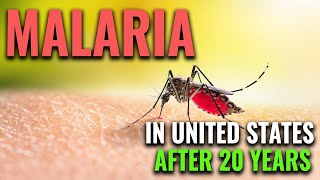
Short Summary
Main recommendation: Protect yourself from mosquito bites during evening and early-morning hours, since locally acquired malaria cases have recently appeared in the United States after about two decades without them. The video stresses the overall risk is still very low because transmission requires a specific chain of events, and it notes malaria is treatable when caught early.
Key Points
- Maryland officials confirmed a malaria case in a Washington DC-area resident with no recent travel outside the country or to Florida or Texas, where malaria has been transmitted locally; the patient was hospitalized and is recovering.
- The likely route was a traveler returning with malaria, an Anopheles mosquito biting and picking up the parasite, then biting a non-traveler; the Maryland strain differs from the Florida and Texas cases.
- The CDC reportedly said malaria spread locally in the US starting in May, the first time since 2003; Florida has seven locally acquired cases and Texas one.
- Dr. Hansen says about 2,000 malaria cases are diagnosed annually in the US, usually in travelers or immigrants from high-transmission regions such as Africa, Asia, and South America.
- Transmission needs a sequence: a mosquito bites an infected person, survives roughly two weeks for the parasite to develop, then bites another person, which is why the risk is considered very low.
Details Worth Noting
- Concrete instructions:
- Avoid mosquito bites in the evening (about 6 to 10 pm) and very early morning (about 3 to 5 am), when Anopheles mosquitoes typically bite.
- Wear long sleeves, long pants, covered shoes, and a hat when outdoors during those hours.
- Use an insect repellent containing 20 to 30 percent DEET; the video says it is safe during pregnancy and is not recommended for children under two months old.
- Remove puddles and standing water nearby, since Anopheles mosquitoes lay eggs in clean, unpolluted water such as marsh grass, ditches, stream and river edges, and small temporary rain pools.
- Keep doors, windows, and screens in good condition to act as a barrier against mosquitoes.
- Before traveling to areas with malaria, Zika, or Dengue, consult an immunization travel clinic and take the recommended precautions.
- Malaria comes in several species; Plasmodium falciparum is the most severe, while all types are treatable, and earlier treatment is better.
- Early symptoms are fever, sweats, and chills in a cyclical pattern; the patient in Maryland first presented with fever and sweating.
- Malaria was once relatively common in the US, including Maryland, but Maryland had no non-travel-related cases for over 40 years before this one.
- Utah reported eight malaria cases this year, all contracted overseas (five after travel to Africa, others to Central and South America), with no confirmed local cases there.
- The video also notes Dengue is rising, particularly in Florida, due to the many mosquito bites this time of year.
Bottom Line
Locally acquired malaria is a real but still rare development in the US, and the practical response is to reduce mosquito exposure, especially during peak biting hours and while traveling abroad.