digest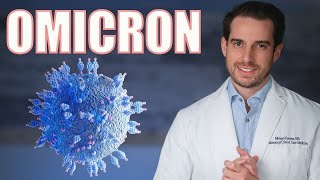
Short Summary
Main recommendation: Stay informed and prepared about the Omicron variant (B.1.1.529) while avoiding both panic and complacency, since its severity, transmissibility, and vaccine resistance are still unknown and should be answered within weeks. Dr. Mike Hansen says the most important step is to learn about Omicron and answer three key questions before drawing conclusions.
Key Points
- The three factors that should determine our reaction are severity of illness, how easily the virus spreads, and whether it escapes vaccine protection.
- Dr. Hansen says Omicron has over 30 concerning mutations in its spike protein, including mutations shared with the earlier Beta and Gamma variants that reduced vaccine effectiveness.
- Dr. Hansen explains that these mutations appear to make the virus bind more tightly to the ACE2 receptor and enter cells more easily, which may promote faster spread and antibody resistance.
- Knowing the genetic sequence is not enough to predict how the virus will behave; real answers depend on lab and community studies.
- Dr. Hansen notes the virus was already spreading internationally, to about 20 countries and within the community in Germany, before it was identified, which he says makes travel restrictions of limited value.
- Dr. Hansen says that, of the known cases, it does not appear to cause worse disease, though it is too early to be definitive.
Details Worth Noting
- Concrete instructions: The speaker gives no step-by-step personal actions. The only actionable guidance is to stay vigilant, avoid overreacting, avoid being carefree, and focus on learning about the variant and answering the three key questions through research.
- Expected timelines: Initial lab data on blood samples from vaccinated people and/or lab animals, plus virus-antibody testing, was expected within a couple of weeks; first real-world vaccine effectiveness studies were expected in about three to four weeks.
- Antibody targets: Vaccine antibodies target three regions of the spike protein, and Omicron has mutations in all three.
- Hypothetical scenario: A highly contagious virus with only common-cold-level severity would not require masks, vaccines, medications, or restrictions, and the speaker says that would be good news, though he considers it unlikely for Omicron.
- Travel restrictions: The speaker considers overzealous partial travel restrictions as doing little more than perhaps slowing spread by some time, and notes countries should not feel punished for reporting variant information.
Bottom Line
Omicron's risks are still uncertain, so the sensible approach is to await the coming lab and real-world data while staying alert, neither panicking nor dismissing the threat.