digest
Short Summary
Main recommendation: With $100, prioritize self-education first, buying specific books (such as Think and Grow Rich, The 4-Hour Workweek, and How to Win Friends and Influence People), because the speaker argues education yields the highest return. The video then lists four other ways to use the $100: learning the stock market through a small hands-on trade, flipping items, affiliate marketing, and starting a lawn-mowing side business.
Key Points
- The five ways to invest $100 named in the video are: (1) buy educational books, (2) invest in the stock market for learning, (3) flip items, (4) affiliate marketing, and (5) buy a used lawn mower and mow neighbors' lawns.
- The speaker's core reasoning is that $100 alone won't grow much in traditional investing, so the most valuable return comes from skills and experience.
- The stock market option is framed mainly as a firsthand learning exercise, not a way to earn large returns on $100.
- Flipping old bills is presented as his personal experience with low risk, since he says the worst case is breaking even.
- Affiliate marketing and the lawn business both depend on building an audience or clients, so they require ongoing effort.
Details Worth Noting
-
Concrete instructions:
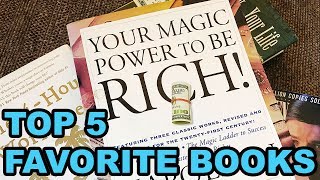
- Book plan from the video: $11 for Think and Grow Rich, $15 for The 4-Hour Workweek, $20 for How to Create Wealth and Passive Income Through Intelligent Buy-and-Hold Real Estate Investing, $10 for How to Win Friends and Influence People, $16 for The Little Book of Common Sense Investing, $14 for Your Money or Your Life, and $14 for The Millionaire Next Door. The speaker suggests reading them over the next year, calling this his personal recommendation rather than a guarantee of results.
- Stock market: open a brokerage account (he uses Robinhood) and deposit $100. Then learn through free resources such as YouTube, CNN Money, CNBC, Motley Fool, NerdWallet, and Reddit, covering topics like candlestick charts and swing trading.
- Flipping old currency: ask a bank for old American bills (pre-1980 or older paper currency, including star notes), buy them at face value, research their values, and resell on eBay. The speaker recounts his personal experience of selling a 1950s $50 star note for $200, and says he sold $100 star notes from before about 1990 for $120 to $150.
- Flipping items: buy phones, game consoles, trading cards, or electronics, and resell them on Craigslist or eBay. Craigslist's free section can supply items, and gas money and listing ads are the stated costs.
- Affiliate marketing: promote products through links in a description; the speaker says his book links average about $160 a month. A camera or website hosting can be funded with the $100.
- Lawn business: buy a used lawn mower, charge neighbors about $30 per lawn, and add a second mower to hire out at $15 an hour.
-
The speaker's own book-reading recommendation is to read in print rather than listen, since he says he retains more that way.
-
Stock trading is framed as a way to experience fear, greed, and frustration firsthand, not as a return strategy.
-
The video mentions Odie of ODI Productions as someone the speaker says earns thousands a day from affiliate marketing, presented as his own secondhand claim, not a guarantee.
Bottom Line
The video frames $100 as best spent on learning and skill-building, not on quick returns, with books as the top priority and the other four methods as ways to gain experience while earning modest income.