 digest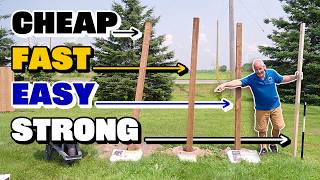
Short Summary
Main recommendation: For a strong, code-compliant post set in a backyard, the video recommends a helical pile when you can get the machine in, and Rapid Post dry-pour concrete as the best practical option for a standard hole, while expansion foam (Sikaflex HST) is the quickest. Regular concrete mix performed worst in the post-pull tests, leaving the most wiggle room and voids. The presenter concludes that Rapid Post is the way to go unless you need the speed of foam.
Key Points
- Listed in the video as the four methods tested: regular concrete mix, Sikaflex HST expansion foam, dry-pour concrete (Rapid Post), and a DIY helical pile.
- The helical pile is described as a great option when you need structure and can get the machine into the yard; the presenter notes it would win a ripping-out contest because its base is wider than the post (it wasn't actually pulled out in the test).
- Regular concrete, mixed and shoveled in without vibration, left the post with room to wiggle and likely voids.
- Foam filled the bottom of the hole better than regular concrete and sets fast, allowing the presenter to build a whole fence in one day.
- Rapid Post proved the loosest in the hole when pulled out, though it got all the way to the bottom; the presenter still concludes it is the best way to go, but it is slower to set.
Details Worth Noting
- Concrete instructions:
- Helical pile: dig about 4 feet down and 8 inches wide for a 4x4 post, using an auger or helical pile setup; the presenter notes it takes roughly 10 minutes per post and uses a 2x4 lever to drive it.
- Regular concrete: about two bags per post, mixed with 5.5 liters of water; use a pail with measurement markings to keep the mix consistent.
- Sikaflex HST foam: roll the bag from the top down to break the seam between the two components and mix them, then cut and pour within about 15 to 20 seconds on a warm day (more time in cold weather). Use one bag per hole.
- Rapid Post: put a little water in the hole first so it cures from the bottom up and top down; pour the whole bag, pouring from a lower height to limit silica dust; add about 1.5 liters more water and roughly half a bag more if the hole is deeper than expected; cover the top with a garbage bag while curing so water does not evaporate.
- Rapid Post manufacturer note mentioned: the presenter says he didn't follow the instructions exactly (he pre-wets the hole), and warns the silica dust is hazardous, so avoid inhaling it.
- Cost noted: regular concrete about $8 per bag, Rapid Post about $10 to $12 per bag (roughly $6 more per post), and Sikaflex foam about $25 per bag.
- Cure and strength: Rapid Post reached about 1,000 pounds of compressive strength after one week; foam was described as satisfying the point-load rating for most deck structures.
- Frost line: in some code scenarios, going below the frost line is required when attaching to a house; in Ottawa, the base of the structure must be wider than the post, which is why helical piles are used.
- Sledgehammer test: dry-pour concrete shattered under repeated hits, and the presenter warns against using dry-pour for outdoor slabs without rebar in a four-season climate.
Bottom Line
For a standard backyard post, Rapid Post dry-pour concrete gives the most solid result when pulled out and holds up well, while foam is the fast alternative and helical piles are the choice when code or frost-line requirements apply.


