digest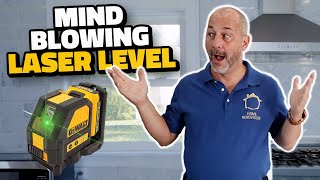
Short Summary
Main recommendation: The presenter demonstrates a self-leveling cross-line laser level, like the DeWalt crossline he uses, showing how he used it on his own kitchen for boxes, windows, cabinets, and tile to get level results. The presenter says a middle-of-the-road cross-line laser like this one is good enough for most interior work, and that homeowners can use it to check an electrician's or contractor's box placement before tiling.
Key Points
- The laser projects both a horizontal and a vertical line, and self-levels when placed on a surface within a reasonable angle; if the angle is too steep, it flashes instead.
- Solid line output indicates the surface is level, which makes it useful for checking fixtures and boxes before finishing work.
- Suspended ceilings can be set using the laser clipped to the grid, which projects a level line around the room to measure from.
- A magnetic metal plate on the back lets the laser attach to metal corner bead, so it can be used anywhere a metal corner is installed.
- Electrical boxes are often not level, and tile backsplashes expose these errors, so the presenter recommends checking boxes before tiling.
- Prices start around $60, and the presenter says mid-range models work well for most interior projects.
Details Worth Noting
- Concrete instructions: Place the laser on a surface and let it self-level, then use the solid horizontal or vertical line as your reference. For a suspended ceiling, clip the laser onto the grid, let it project a line around the room, and measure up the same distance from that line at each point to set a level ceiling. For tile, check and adjust all electrical boxes to the laser line before you start tiling. For mounting on a stand, use the universal quarter-inch thread on the bottom with a standard camera-style adjustable stand, which the presenter links to on his Amazon store.
- Metal corner bead works best for magnetic attachment; plastic or paper corner beads may cause problems, so the presenter suggests planning metal corner bead early in the build.
- Higher-powered lasers with long range and special glasses exist, but the presenter says they are unnecessary for most interior work.
- The presenter notes that older electrical practice relied on tape measures, which is less reliable on uneven dimensional-lumber floors.
Bottom Line
A self-leveling cross-line laser is a low-cost, versatile tool for checking and laying out interior work, and using it to verify contractors' and electricians' boxes can prevent visibly uneven finishes.