 digest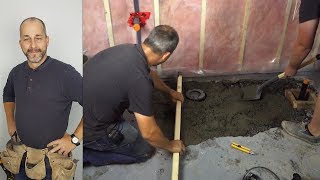
Short Summary
Main recommendation: To backfill a basement shower plumbing area with gravel and pour concrete cleanly, build a removable wood form box around the plumbing before filling with gravel, then mix concrete in a pail and screed the surface with a 2x4 before the leveling compound and vinyl go down. The method is presented as a way to keep the mess contained, avoid wheelbarrows and chipping out concrete later, and give access to the shower pan underside.
Key Points
- A four-piece wood box, screwed together at an angle, is set around the plumbing so it can be pulled out the next day, leaving an isolated void for the shower pan assembly.
- Gravel is placed roughly 2.5 to 3 inches deep (depending on conditions), pushed back under the plumbing rather than letting it roll away, and dampened with a couple of pails of water to pack it.
- Mixing in a bucket (pail) instead of a wheelbarrow or upstairs keeps the dusty mess in the work area, and the presenter advises wearing a mask if needed since it's a bit dusty.
- Concrete is leveled with a 2x4 worked from more than one angle, and small low spots are topped up with a shovel; surface bumps are acceptable because a leveling compound will be used later.
- Sand mix is left room for under the shower pan, and the presenter expects to close up the next day.
Details Worth Noting
- Concrete instructions: Build the box from four pieces of wood, screw it together with one screw set on an angle, and place it around the plumbing before backfilling. Fill with gravel, pushing it back underneath the plumbing so no gravel rolls away. Add a couple of pails of water to pack the rock. Use a slow-speed drill with a regular concrete blade to mix regular Sakrete concrete mix (the version with a little gravel) in a pail with volume markings. Add about 2.7 liters of water per bag first (the presenter got just under three liters), then add about 70 to 80 percent of the bag, mix thoroughly, and add the rest, so it doesn't clump. Pour and work the concrete with a 2x4 cut slightly longer than the hole plus a few inches on each side, using extra water in the final batch for better flow. Remove the screws the next day to pull out the wood blocks. Use a shovel to fill small holes, and use a leveling compound later before vinyl goes on.
- The 2x4 should not be an 8-foot board, since it would dip into the floor and waste concrete.
- Concrete was poured with some working time, unless a quick-setting hardener is used.
- Bathroom basement floors are often curved, which can create ridges that must be avoided.
- The presenter notes a pail can burst under the pressure of a full bag, so extra pails may be needed.
Bottom Line
Using a removable wood form, a pail-mixed concrete batch, and a 2x4 screed lets a basement shower rough-in be backfilled cleanly and kept accessible for later work.


