 digest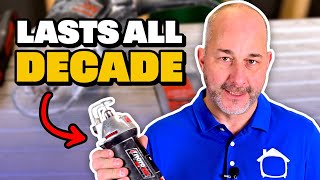
Short Summary
Main recommendation: Use a Rotozip (rotary drywall cutout tool) with a careful measure-locate-hang-cut sequence, rather than a hand saw, to make precise cutouts for electrical boxes in drywall. The key technique is to pre-screw the drywall so it sits flat against the boxes before cutting, which prevents cracking. The presenter says this approach can let you cut and install drywall around tightly grouped boxes with no cracks.
Key Points
- The presenter has used Rotozip tools for over 30 years, with his current model about 10 years old because the first one lasted 20 years, which he presents as a strong investment for a full-time general contractor.
- Boxes are typically raised off the wall, so screwing the drywall on will warp it; pressure during cutting can crack it.
- Cutting technique differs by box type: oversized boxes, octagon boxes, boxes with tabs, and plastic boxes with a back wall each require different handling.
- Cutting should stay at a slight angle with the guide tip riding the box edge; a squeal means the bit is pressing too tight.
- Cutouts for multi-gang or triple boxes require cutting along each bump, so visualizing the box shape first helps.
Details Worth Noting
- Concrete instructions: Locate and measure: find each stud, measure down to the middle of each box, and mark the height on the wall (e.g., 22 1/2 inches, 28 inches), labeling the gang count (e.g., "3" for three-gang, "0" for octagon). Choose any whole number; the mark only needs to be in the middle of the box.
- Concrete instructions: Hang the drywall first: on a foot pedal or while standing on the drywall, drive one screw at the stud in the far corner fully home, set a screw at the next stud leaving the head raised, then add one screw in the middle and one in the bottom corner on the other side. Use only four corner screws at the box locations, not a full screw pattern.
- Concrete instructions: Transfer the marks from the wall to the drywall, writing the same measurements and box types on it.
- Concrete instructions: Set depth so that the cutting flutes sit just under the drywall: the top quarter inch is a smooth pilot shank, so set the depth so there's cutting material matched to the drywall's half-inch thickness plus the pilot. For plastic boxes with a back wall, set the depth shorter to maintain positive contact with the box edge.
- Concrete instructions: Cutting direction: go counterclockwise whether cutting on the outside or inside of the material. Start in the middle, drive to the side, hop over the edge, plunge cut on the other side, then trace around the box.
- Concrete instructions: For bit changes, press the red switch to release the collar, insert the bit until it clicks, then tighten the collar with a wrench while holding the button. Use bits specific to your tool's shaft size.
- Concrete instructions: Finish by leaving a few inches between boxes before placing additional screws, so compound application is easier.
- The presenter notes the tool produces a lot of dust and recommends a mask.
- The presenter contrasts corded longevity with battery tools, claiming a 20-year lifespan on the job for his model; this is his personal experience.
- Rotozip bits come in boxes of about 10 and two shaft dimensions exist, so buy the one matching your tool.
Bottom Line
Pre-screwing the drywall to flatten it against the boxes, then cutting with a slight angle and a light touch, is what prevents cracks and yields clean openings around tight box clusters.


