 digest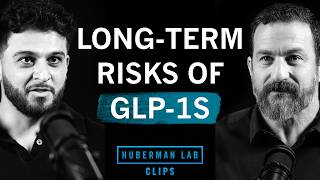
Short Summary
Main recommendation: Dosing of GLP-1 drugs (semaglutide, sold as Ozempic/Wegovy, and tirzepatide, sold as Mounjaro/Zepbound) should be kept low, combined with lifestyle changes, and tapered gradually rather than taken at high doses, because the speakers see promising weight and chronic-disease benefits but unresolved questions about long-term use, side effects, and brain effects. The speakers, Dr. Abud Bakri and Dr. Andrew Huberman, present these drugs as transformative for a strained medical system while stressing that the long-term risks are not yet well understood.
Key Points
- GLP-1 drugs have produced weight loss of roughly 10 to 30% of body weight, compared with the 5 to 10% seen with earlier drugs, and the speakers say they may reverse the rate of chronic disease.
- Bakri frames the drugs as a response to a collapsing medical system driven by obesity, prediabetes, and diabetes, which the existing clinician and financial resources could not handle.
- The speakers note that when people stop high-dose treatment, some regain weight, and there are no good guidelines from manufacturers on tapering off.
- Bakri raises concern about brain development and learning in the context of GLP-1 levels that may rise a thousandfold or more with newer drugs, noting that the long-term effects on neuroplasticity are unknown.
- Reported side effects such as depression or low blood pressure may be linked to misuse, too high a dose, low electrolyte or nutrient intake, or eating too little, rather than the drug alone.
- Reduced appetite may change social eating and possibly dopamine signaling, and people are reportedly stacking GLP-1s with ADHD medications or peptides without clear data.
Details Worth Noting
- Concrete instructions: The speakers emphasize getting the dosage right and using clean, verified sources. Bakri describes a "training-wheels" approach: start with the lowest dose that has an effect, combine it with diet advice, exercise, and lifestyle modification, then gradually reduce or keep the drug depending on need. Patients should avoid taking mega doses that lead to eating only one meal a day, and should maintain electrolyte and micronutrient intake and adequate food.
- Bakri states that a 300-pound veteran patient in his VA clinic lost 50 to 100 pounds on GLP-1s, and that bodybuilders were among the early users before FDA approval for weight loss.
- Semaglutide was the blockbuster drug. Byetta, an earlier GLP-1 drug, was among the first, and the speakers note it changed the trajectory of Bakri's grandmother's diabetes.
- The speakers note that people commonly microdose these drugs, taking much less than standard clinical trial doses, and some share or cost-share supplies from other sources.
- Zach Knight, a UCSF scientist, previously reported that diabetes drugs raised GLP-1 levels by two to four times, while the newer drugs are described as raising them far more.
- Bakri says the effect on Alzheimer's risk for prediabetic or diabetic 60-year-olds may be positive, though a recent study did not show a strong prevention signal.
Bottom Line
The speakers see GLP-1 drugs as a major advance against obesity and chronic disease, but they treat long-term dosing, tapering, brain effects, and side effects as open questions that call for careful, supervised use rather than high-dose or unsupervised experimentation.




