 digest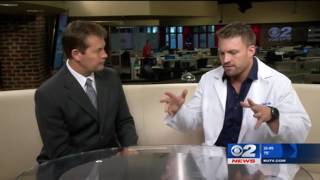
Short Summary
Main recommendation: If you think you or someone else is having a stroke, call 911 immediately, because time is critical and treatment works best when started quickly. The video also explains the BE FAST acronym for recognizing stroke symptoms and notes that many people can improve substantially after a stroke, depending on its location and size.
Key Points
- Time matters most: the speaker says roughly 32,000 brain cells die each second during a stroke, and modern tools can remove a clot or otherwise intervene acutely.
- Recognition uses BE FAST: B for balance changes, E for eye or vision changes, F for face weakness, A for arm weakness, S for speech or language abnormalities, and T for time to call for help.
- Acute treatment has time windows: the speaker mentions the first three hours and the first four and a half hours, and says treatment options now extend further.
- Recovery varies: people can show marked, proven improvement in the subacute phase after a stroke, and outcome depends on where the stroke is and how big it is.
- Statistics cited on screen: about 130,000 Americans are killed by strokes each year, and a stroke occurs every 40 seconds.
Details Worth Noting
- Concrete instructions: If you think you're having a stroke, call 911 and get emergency attention right away. If you are helping someone, check the BE FAST signs: loss of balance, vision changes or loss of sight in one eye or part of the visual field, face weakness, arm weakness, abnormal speech or language, and note the time symptoms started, since timing affects treatment.
- The speaker notes that the first step after a stroke is acute treatment right when it happens, and that time frames such as three hours and four and a half hours are commonly discussed.
- Recovery is not uniform: the speaker says improvement depends on the stroke's location and size, and that some people improve markedly.
- The speaker frames this as National Stroke Awareness Month in May and says thousands of Americans suffer strokes each year.
- The speaker's remarks are general educational information presented by a medical center representative and are not individualized medical advice.
Bottom Line
Recognizing stroke signs quickly and calling 911 right away is the most important action, because faster treatment can limit brain damage and improve outcomes.


