 digest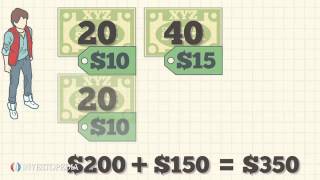
Short Summary
Main recommendation: Choose your cost basis method deliberately before selling, because the method determines your taxable profit and can reduce what you owe; the specific identification method, selling the higher-cost shares, can lower taxes compared with FIFO. The transcript explains FIFO, specific identification, and average basis using a single example of 60 XYZ shares bought in two batches.
Key Points
- Cost basis is the original value of a security you sell (stock, bond, or mutual fund), and it is subtracted from sale proceeds to calculate profit or loss, which drives the tax owed.
- FIFO (first in, first out) uses the purchase price of the earliest shares acquired first; in the example, Marty's FIFO cost basis on 30 shares sold was $350, yielding a $400 profit.
- Specific identification lets you choose which shares were sold; selling the higher-cost June shares at $15 raised Marty's cost basis to $450, cutting his taxable profit to $300.
- Average basis averages the total cost of all shares held and applies it to the shares sold; in the example it produced a $400 cost basis and a $350 profit.
- Commissions and transaction fees increase cost basis, while stock splits can decrease it.
Details Worth Noting
- Concrete instructions:
- Identify how many shares you hold and the purchase price and date of each batch before you sell.
- Calculate your cost basis under the method you intend to use (FIFO, specific identification, or average basis) by multiplying the chosen per-share cost by the number of shares sold.
- Subtract the cost basis from total sale proceeds (shares sold multiplied by sale price per share) to find your profit or loss.
- For average basis, add the total cost of all shares held, divide by the total number of shares acquired, and multiply by the number of shares sold.
- To use specific identification to reduce taxes, plan ahead and select the higher-cost lots as the shares you sell, as Marty did with the June purchase.
- Example figures: 20 shares at $10 in January and 40 shares at $15 in June; selling 30 shares at $25 for $750 in proceeds.
- The transcript's example applies to a tax-reduction context; it does not give tax advice beyond illustrating how the calculations differ.
- Average basis in the example uses ($200 + $600) × 30 ÷ 60 = $400.
Bottom Line
Your choice of cost basis method directly changes your taxable gain on the same sale, so decide the method and identify the lots before you sell.




