 digest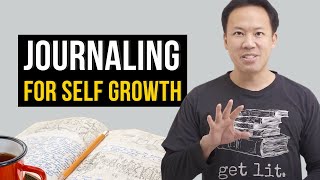
Short Summary
Main recommendation: Keep a dedicated handwritten notebook for learning and a separate personal journal, and write in it every day, even if only one sentence. Jim Kwik argues that handwriting forces you to filter information and that regular journaling builds self-awareness, perspective, and the clarity that lets you reach your goals.
Key Points
- Handwriting beats typing for note-taking because you cannot write as fast as someone speaks, so you are forced to filter and capture only the important parts.
- Kwik cites studies in which people who handwrote notes scored better on tests than people who typed them, and he notes that full transcripts or full dictation were the worst approach.
- Journaling creates a feedback loop: writing thoughts down, organizing them, and reviewing them trains critical thinking and metacognition.
- Re-reading old journal entries gives you perspective, which Kwik calls a powerful tool for learning and thinking.
- He mentions geniuses such as Leonardo da Vinci, Marie Curie, and Einstein kept journals, and he personally wonders and argues it's more likely that journaling helped make them geniuses rather than the reverse.
Details Worth Noting
Concrete instructions:
- Get a physical notebook dedicated to your learning and a separate life journal. Write by hand rather than typing.
- For each learning note, draw a vertical line down the middle of the page. On the left, write the lessons. On the right, answer three questions and write each answer down: How can I use this? Why must I use it? When will I use it?
- In your life journal, record what you are grateful for, your vision, your daily experiences, and what you are struggling with or reflecting on.
- Write every day, even if it is only one sentence, and be consistent. If you journal in the morning, do it every morning; if at night, set an alarm or trigger so it becomes a habit.
- Write in your own words rather than copying his phrasing so the journal stays personal.
- Periodically re-read old entries to gain perspective on your growth.
- Ask yourself how you can make the process more enjoyable, meaningful, and consistent.
- Kwik's specific anecdote: at age 18, while visiting a friend's family, the father asked him what he wanted to be, do, have, and share, then had him write it down, which became his bucket list and his drive to learn.
- Kwik notes that he has journals going back years and that he values revisiting them.
Bottom Line
Handwritten notes and a daily journal are a low-cost habit that, according to Kwik, sharpens thinking and self-awareness over time, so start with one sentence today and build from there.



