digest
Short Summary
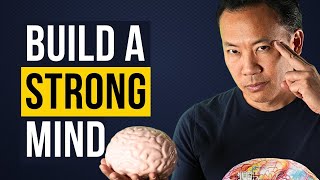
Main recommendation: Keep your brain active and protected as you age by combining lifelong learning, regular physical exercise, good hydration and sleep, social engagement, and stress management, rather than letting your mind "retire" with your career. Jim Kwik describes aging changes such as slower processing speed, reduced working memory, and weaker episodic memory, and says these can be supported through daily habits. He also mentions a memory training program he has done himself, which he says teaches memory as a trainable skill rather than a fixed trait.
Key Points
- Aging commonly affects processing speed, working memory capacity, episodic memory (recalling specific events), and memory consolidation, while procedural memory (how to do things) and implicit memory (habits) tend to stay relatively stable.
- The biggest cognitive dips happen around finishing school and retiring, because people stop learning once formal education or work ends. Studies of nuns living to 89 and older, described in the "Aging with Grace" study, linked longevity partly to lifelong learning, alongside faith and gratitude.
- Physical exercise, especially cardiovascular activity, increases blood flow and oxygen to the brain, and Kwik says it also raises BDNF, which he calls "fertilizer for neuroplasticity."
- Sleep supports memory consolidation, and Kwik says some research suggests the brain's "sewage system" clears beta-amyloid plaque during sleep, which he links to brain aging challenges.
- Chronic stress can damage the hippocampus, the brain region involved in forming and retrieving memories.
Details Worth Noting
- Concrete instructions: Engage in mentally stimulating activities such as learning a new skill or language, solving puzzles, playing a musical instrument, or reading, which Kwik calls "for your mind what exercise is for your body."
- Concrete instructions: Exercise regularly, favoring walking, swimming, cycling, racket sports such as table tennis or pickleball, and dance, which Kwik says is especially good for the brain.
- Concrete instructions: Stay hydrated, especially first thing in the morning, since Kwik says you can lose up to a pound of water overnight through breathing and sweating; he says being 2% dehydrated can affect cognitive performance, and that staying hydrated could boost reaction time and thinking speed by upwards of 30%.
- Concrete instructions: Manage stress with meditation, deep breathing, or time in nature.
- Concrete instructions: Stay socially engaged, since social interaction can reduce depression, stress, and loneliness.
- Concrete instructions: Keep a dream journal or learn to remember your dreams, because Kwik says dreams can spark creative ideas, citing Frankenstein, "Yesterday," the periodic table framework, and the sewing machine as examples.
- Kwik's central framing is that there is no good or bad memory, only a trained or untrained one.
Bottom Line
Brain health in later life is largely something you build through consistent daily habits, and Kwik's view is that continuing to learn and stay active matters more than accepting decline as inevitable.