digest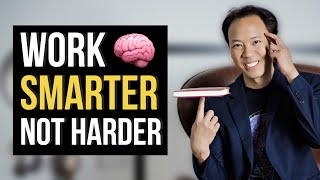
Short Summary
Main recommendation: Work smarter by focusing on priority management, identifying the few high-leverage activities that produce most of your results, rather than trying to manage every task or time slot. Jim Kwik uses the story of a power plant technician who charged $10,000 for turning one screw to illustrate that knowing what to do is worth more than doing lots of work.
Key Points
- Knowledge is profit: in an expert economy, the faster you learn and think, the more you earn, because value comes from brain power rather than muscle power.
- Apply the Pareto Principle (the 80/20 rule): roughly 20 percent of efforts, clients, or studies produce about 80 percent of the results, so concentrate on that 20 percent.
- Shift from time management to priority management, since everyone has the same 24 hours and the goal is to spend them on what matters most.
- Keep a short list of three or four high-win tasks each day instead of trying to complete every item on a to-do list that can grow to 200 or 300 items.
- Use a not-to-do list and say no more often than yes, since saying yes to too many things drains energy and focus.
Details Worth Noting
Concrete instructions:
- Make a to-do list, then identify the three or four items that would give you a big win that day.
- Create a not-to-do list naming things you will not spend time on, and treat them as non-negotiable.
- Apply a "heck yes or heck no" filter to new opportunities: if you don't feel a full-on "heck yes," lean toward "heck no."
- Triage each task with the four Ds: do it, delete it, defer it to another time, or delegate it.
- Train yourself to regularly ask, "What's the best investment of this moment?" or "What screw, or switch, will have the most return on my effort?"
- Identify the first domino, the few early actions that drive the most downstream results, and start there.
- Reflect on the day's result by asking whether you accomplished the few key tasks that matter.
- Book referenced: Good to Great by Jim Collins, which the speaker says covers how saying yes to too many things leads to burnout.
- He says he's noticed that high performers often keep a not-to-do list, and quotes the idea 'say no to good to say yes to great.'
- The speaker frames the core priority idea as keeping "the most important thing the most important thing," and warns that marking everything as important makes nothing important.
- The power plant example is a story, not a verified event; the speaker says it was inspired by a podcast filming and is presented as a parable.
Bottom Line
Results come from identifying and protecting the few high-leverage actions that matter most, not from working longer hours on everything.