 digest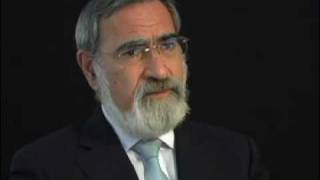
Short Summary
Main recommendation: Believers and atheists can hold a respectful, constructive dialogue in pursuit of truth, as long as neither side mocks, misrepresents, or ridicules the other. Rabbi Jonathan Sacks draws this from his own friendships with atheist thinkers, including his doctoral supervisor Sir Bernard Williams and the philosopher Sir Isaiah Berlin.
Key Points
- Sacks describes his doctoral supervisor, Sir Bernard Williams, as a fervent atheist who never challenged or ridiculed his faith and only asked whether he could make his arguments clear and cogent.
- Sir Isaiah Berlin, a secular Jew and skeptic, joked about being "tone-deaf" to God yet remained friendly, and asked Sacks for a religious funeral, which Sacks conducted.
- Sacks argues atheists play a useful role by challenging religious organizations when they accept injustice, seek power, or practice intolerance.
- Sacks rejects "angry atheists," whom he compares to "road rage," because their writing attacks a caricature of religion rather than the real thing.
Details Worth Noting
- Concrete instructions: The video gives no step-by-step method. The actionable guidance is implicit: in dialogue with atheists, make your points clearly and cogently, avoid mocking or misrepresenting the other side, and engage the strongest version of their views rather than a caricature.
- Sacks' book The Politics of Hope (1997) disagreed somewhat with Berlin's political philosophy; Sacks sent Berlin the book, and Berlin said he would respond but months passed without word before Sacks called him.
- Berlin's wife, Lady Elaine Berlin, told Sacks that Berlin had just discussed asking him to officiate at his funeral; Berlin died four days later.
- Biographer Michael Ignatieff asked Sacks why a secular Jew wanted a religious funeral; Sacks answered that Berlin "may not have been a believing Jew, but he was a loyal Jew."
- Sacks frames the tension as a shared pursuit of truth, not a contest to win.
Bottom Line
Respectful disagreement between believers and atheists is possible and valuable, and atheist criticism is most useful when it targets religion's real failings rather than a distorted version of it.



