 digest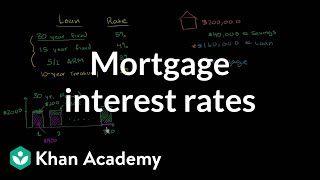
Short Summary
Main recommendation: Understand the main mortgage types (30-year fixed, 15-year fixed, and 5/1 hybrid adjustable-rate mortgage) and compare them by how much risk you can accept in exchange for a lower or more predictable interest rate. The video's explanation uses a $200,000 house, a $40,000 down payment, and a $160,000 mortgage, and it stresses reading the fine print before borrowing.
Key Points
- A mortgage is a loan secured by the house: if payments stop, the lender can take the house through foreclosure, and you own it outright only after the loan is fully paid.
- A 30-year fixed mortgage keeps the same rate and payment for 30 years (360 monthly payments), but early payments are mostly interest, with principal growing slowly over time.
- A 15-year fixed mortgage has the same structure over 180 months, so monthly payments are higher (the video uses made-up illustrative figures of about $2,800 versus $2,000), and the quoted rate in the example is lower (4% versus 5%).
- A 5/1 hybrid ARM (adjustable-rate mortgage) has a fixed rate for the first 5 years, then can adjust once a year, typically tied to an index such as the 10-year U.S. Treasury rate plus a set margin (for example, Treasury plus 1%).
- Quoted rates usually rank 30-year fixed highest, 15-year fixed next, and adjustable lowest, because the lender takes on the most interest-rate risk with the longest fixed rate (though the video notes 'most times' this is the case, not always).
Details Worth Noting
- Concrete instructions: Before choosing a mortgage, compare the quoted rate and payment for each type using the same loan amount, and check whether the rate is fixed or adjustable and for how long. Read the loan documents for the index used after the fixed period and the margin added to it. Look for rate caps limiting how much the rate can rise each year or over the life of the loan. Expect the payment on an ARM to possibly rise after the fixed period, especially if interest rates increase, and plan for that possibility. Do not treat the video as a substitute for reading the full loan terms, especially for interest-only loans, option ARMs, or other exotic products.
- The video's example uses simplified, made-up figures ($2,000 and $2,800 monthly payments; 3% starting ARM rate; 1% margin), not actual calculated payments for a $160,000 loan at 5%.
- Example of an ARM reset: a 3% starting rate with a Treasury rate rising to 4% plus a 1% margin would reset the mortgage to 5%.
- Lenders charge higher rates for longer fixed periods because they carry interest-rate risk if market rates rise above their borrowing costs.
- The down payment matters to lenders because it reduces their loss if the borrower defaults and the house must be recovered.
Bottom Line
Choosing a mortgage means trading predictability against cost: fixed loans protect you from rate increases at a higher price, while ARMs start cheaper but can become more expensive later, so the fine print determines your real risk.


