 digest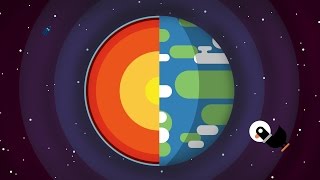
Short Summary
Main recommendation: The video's central answer is that Earth formed about 4.6 billion years ago from dust and debris, and its structure, water, atmosphere, and magnetic field came from a sequence of violent and chance events that made life possible. Rather than giving a how-to, it explains the layers of the planet and why our existence depends on them.
Key Points
- Earth formed from the remnants of dead stars collecting in a dense gas cloud, a process taking roughly 10 to 20 million years that is still not fully understood.
- A Mars-sized object collided with the young Earth, and the debris formed the Moon.
- Earth cooled over time, and water from inside the planet and from asteroids produced the oceans and clouds.
- Earth's surface is 71% water and 29% land; 97.5% of that water is saline, and only 2.5% is fresh water.
- Plate tectonics created mountains such as Mount Everest and trenches such as the Mariana Trench.
Details Worth Noting
Concrete instructions: The transcript contains no step-by-step instructions, preparation, or actions for the viewer to take.
- Earth's crust is about 50 km thick (5 to 70 km range), while the deepest hole ever drilled by humans is 12.262 km deep.
- The mantle is about 2,900 km thick, and the outer core is a liquid iron-nickel layer about 2,266 km thick.
- The inner core is about 1,200 km in radius (about 70% of the Moon's size) and grows roughly 1 mm per year.
- The atmosphere's troposphere is about 12 km thick, the ozone layer sits in the stratosphere, and the mesosphere is the coldest layer at about -85°C.
- Humans have existed for about 200,000 years, roughly 0.004% of Earth's history.
Bottom Line
Earth is a layered, water-rich planet shaped by chance and violent events, and the video frames our existence on it as a matter of luck.




