digest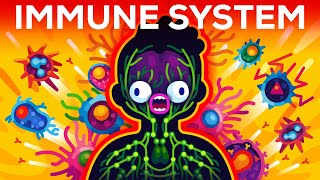
Short Summary
Main recommendation: Understand the immune system as a coordinated, multi-stage defense in which your body is the battlefield, and that it fights invaders such as bacteria from a wound through a sequence of cells that escalates from fast innate responses to targeted adaptive responses. The transcript describes this as a story of macrophages, neutrophils, complement proteins, dendritic cells, helper T cells, and B cells working in sequence, with memory cells left behind for future protection. It frames the immune system as the most complex biological system after the brain, with hundreds of organs and a transport network throughout the body.
Key Points
- The first responders are macrophages, large cells that engulf and digest bacteria and can eat about 100 bacteria before becoming exhausted.
- Neutrophils arrive in large numbers from the blood, attack aggressively, and often die after killing; some explode to release DNA-based nets that trap bacteria.
- Complement proteins act as an automated liquid weapon, stunning and killing bacteria by ripping holes in them.
- Dendritic cells serve as intelligence officers: they collect bacterial fragments, travel to lymph nodes, and activate the matching helper T cell.
- Activated helper T cells clone and then support macrophages and activate B cells, which pump out antibodies that clump and immobilize invaders.
- After the infection is cleared, some helper T cells and B cells persist as memory cells, which can provide long-term protection against the same bacteria.
Details Worth Noting
- Concrete instructions: The transcript gives no actionable advice for the viewer, such as what to buy, use, avoid, or do. It is an explanation of how the immune system works, so no steps, doses, or preparation methods are provided.
- The video notes that B cells can produce up to 2,000 antibodies per second once activated.
- The full adaptive response takes about a week after injury to reach full force, and helper T cells need a few hours to find and activate the right partner.
- Inflammation (swelling, redness, warmth) is described as fluid flowing into the wound to bring in immune cells and complement proteins.
- The narrator states that the immune system holds billions of unique helper T cells, each able to recognize a different possible enemy, which the video says will be covered in a future episode.
Bottom Line
The immune system is a layered, cooperative defense that starts with fast, crude attacks and escalates to precise, antibody-based responses, which is why a minor wound can quietly involve millions of cells fighting a battle you never notice.