 digest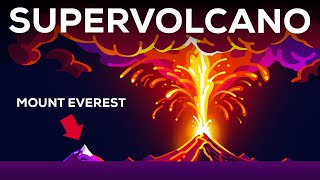
Short Summary
Main recommendation: Do not fear supervolcanoes; they are a real but rare natural hazard, and the video's advice is to monitor slow warning signs and develop mitigation tools rather than panic. The video explains how volcanoes form, how the Volcanic Explosivity Index (VEI) scales eruptions, and what makes supereruptions different from ordinary volcanic activity.
Key Points
- Earth's interior heat, left over from formation and radioactive decay, escapes upward through rock currents, and the crust is the only barrier, which is why volcanoes form.
- Volcanoes mainly come from two sources: boundaries between tectonic plates, where water-altered crust melts as it sinks, and mantle plumes, which are columns of hot rock rising from the core-mantle boundary.
- The VEI is a logarithmic scale of erupted volume: VEI 2 is about 400 Olympic pools of lava, VEI 5 is cubic kilometers of debris, VEI 6 can cool global temperatures, and VEI 7 is "super-colossal."
- "Supervolcano" is a media term, not a scientific one; a super-eruption ejects at least 1,000 cubic kilometers and leaves a caldera behind.
- It is estimated that one of the few volcanoes capable of supereruptions could cause a catastrophic eruption every 17,000 years on average, which the video says would make them far more frequent than comparable asteroid impacts.
- The video's bottom-line assessment is that the chance of a VEI 8 eruption in the next few hundred years is under 2%, and it would not come as a sudden surprise.
Details Worth Noting
Concrete instructions: The video gives no personal action steps for viewers. Its actionable guidance for societies is to watch for slow changes in magma reservoirs, such as ground swelling and temperature increases, to get early warning that can protect people living closest to a volcano, and to develop tools that remove sulfur and ash from the stratosphere to address climate disruption from eruptions.
- Historical examples cited: Krakatoa in 1883 (loudest recorded sound, 30m tsunamis, global cooling of nearly 0.5°C); Mount Tambora in 1815 (400 times the energy of the Tsar Bomba, no summer the following year, over 100,000 deaths); Oruanui about 26,500 years ago in New Zealand (20km caldera, Southern Hemisphere cooling); Lake Toba about 74,000 years ago (5300 cubic km of material, 4°C global temperature drop, with possible decade-long volcanic winter and centuries of drought, though full recovery timeline is uncertain).
- The Siberian Traps about 250 million years ago raised ocean temperatures above 40°C, causing the Permian–Triassic extinction, which killed over 90% of species, with about 9 million years needed for recovery.
- The video says Yellowstone will erupt again but expects relatively small eruptions, not an apocalypse.
- It notes the Earth's plates move up to 15 cm per year, and mantle plumes move material at a few millimeters per month.
Bottom Line
Supervolcanoes are real but extremely rare, and the video argues that monitoring and mitigation research make the threat manageable rather than a reason for alarm.




