 digest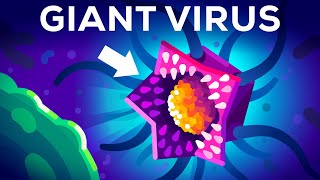
Short Summary
Main recommendation: The video's central conclusion is that giant viruses ("gyruses") and their virophage hunters blur the line between living and non-living, and that they likely influence the evolution of life in ways we have only begun to understand. Its overall point is that the microscopic world is far more complex and under-explored than expected, with the discovery of these viruses only being about 20 years old.
Key Points
- Viruses are extremely simple, consisting of a protein hull, a small amount of genetic material, and a few proteins, with no metabolism and no means of self-propulsion, so they depend entirely on infecting cells.
- Scientists disagree on whether viruses are alive, with some views treating the infected cell as the living "viral cell" and viral particles as seed-like forms, and others considering them dead material.
- Giant viruses were first identified in 2003 and were long mistaken for bacteria under microscopes because of their unusual shape and size.
- Gyruses have hundreds or even thousands of genes, far more than typical viruses (coronavirus about 15, HIV or flu about 10), and many of their genes resemble those found in living organisms.
- Virophages are viruses that hunt gyruses by hijacking their viroplasm factories, and some act as sleeper agents by integrating into newly made gyruses.
- Gyruses and protists have counter-defenses, including a possible gyrus immune system and protists that store virophage genetic code to fight gyrus infections.
Details Worth Noting
- Concrete instructions: No step-by-step instructions, dosages, or actionable procedures are given; the video is explanatory and does not recommend any actions for the viewer.
- Scale: An estimated 10,000 billion billion billion viruses exist on Earth, which the video says would stretch about 100 million light years, or 500 Milky Way galaxies wide, if lined up.
- Gene comparison: Human cells have around 20,000 genes, a typical bacterium a few thousand, and a tomato about 35,000, so the video frames gene count as one measure of complexity rather than the whole story.
- Gyrus infection cycle: A gyrus enters a cell, reorganizes its structure into a "viroplasm" factory, may build a membrane to shield from antiviral defenses, assembles new gyruses, and then triggers the cell to self-destruct.
- Sputnik example: The virophage Sputnik hijacks mamavirus viroplasm factories, producing mostly new Sputnik particles and few, often deformed, gyruses.
- Evolutionary impact: The video suggests gyruses may have influenced life for billions of years by integrating their genomes into hosts, though this is speculative.
Bottom Line
The boundary between living and non-living is less clear than commonly assumed, and giant viruses and their virophage predators show that the microscopic world still holds major discoveries.




