digest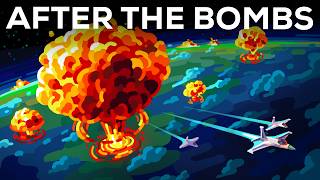
Short Summary
Main recommendation: The video's central conclusion is that a full-scale nuclear war would likely cause a nuclear winter that could starve billions, so the only sure protection is preventing nuclear war entirely. It explains the chain of events from firestorm soot to collapsed food production, then compares regional outcomes across limited and large-scale conflicts.
Key Points
- Mass firestorms from detonations would loft soot into the stratosphere, where rain cannot wash it out, so it can block sunlight for years.
- Nuclear winter is not permanent or a new ice age; its climate effects last roughly a decade at most, but the initial disruption is abrupt.
- Midlatitude breadbasket regions, such as the US Great Plains and Ukraine, would likely stay below freezing for several years, cutting most food supply.
- Modern agriculture depends on fuel, fertilizer, and machine parts, which could disappear after a nuclear exchange, worsening food shortages.
- Estimated impacts vary by scenario: a limited India-Pakistan exchange could starve up to 250 million people, while a full-scale US-Russia war could cause up to 5 billion starvation deaths within two years.
Details Worth Noting
- Concrete instructions: The video gives no personal preparation steps. Its only actionable advice is to make sure nuclear war never happens, and it suggests supporting expert organizations or becoming a citizen expert to reduce the risk.
- The estimates depend on assumptions about how much material burns hot enough to start firestorms, which varies with construction materials, season, and nearby forests; the video notes this is still an active research area.
- In a limited India-Pakistan war, immediate explosions would kill around 27 million people, and a mild "nuclear autumn" would follow rather than a full winter.
- Southern Hemisphere countries such as Australia, New Zealand, and Argentina might fare better, with milder winters and more livestock, which is less climate-sensitive than crops.
Bottom Line
The video frames nuclear war as a risk that threatens global food systems far beyond the blast zones, making prevention the most important response.