 digest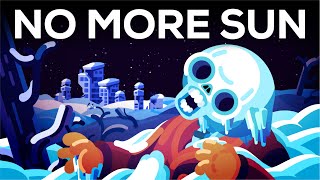
Short Summary
Main recommendation: The video explores a hypothetical: how a close stellar flyby could disrupt the Solar System or even eject Earth, and what might happen if Earth became a rogue planet. It frames the main threats as gravitational disruption of the Oort cloud, a stellar pass through the inner Solar System, and a long, cold extinction process that could last thousands of years.
Key Points
- Gravity from a passing star can disrupt the Oort cloud, potentially sending comets and asteroids into the inner Solar System, which could trigger a new period of planetary bombardment.
- The video names two scenarios: Gliese 710, a red dwarf with about half the Sun's mass expected to pass through the Oort cloud in about a million years, and the possibility of a star passing as close to Earth as Earth is to the Sun, which could eject Earth.
- The estimated chance of such an ejecting flyby is about 1 in 100,000 over the next five billion years, described as small but not absurdly so.
- Ejection would unfold as a slow decline: a growing red glow, then Sun shrinkage, falling temperatures to about -50 C at Mars's orbit, -150 C at Jupiter's orbit, and near absolute zero by Pluto's orbit.
- Humanity would have thousands of years of warning, and the video speculates that a few million people might survive in artificial complexes powered by geothermal, nuclear, or possibly fusion energy.
Details Worth Noting
- Concrete instructions: The video gives no step-by-step preparation guide. Its only actionable direction is that humanity could prepare by building huge artificial complexes powered by geothermal and nuclear energy, possibly using fusion by harnessing the surrounding ice, and that survivors might later seek a new habitable planet around another star.
- The video notes that about 70,000 years ago a red dwarf–brown dwarf binary passed through the Oort cloud and may have sent asteroids toward the inner Solar System, with visitors possibly arriving in about two million years.
- Gravity weakens with distance and depends on mass; the Sun makes up 99.75% of the Solar System's mass, which is why it governs the orbits of everything else.
- Atmospheric freezing would occur as nitrogen and then oxygen snow deposits into a sheet about 10 meters thick over the surface.
- Spaceflight would become easier without an atmosphere in the way, which the video suggests could let survivors leave Earth.
Bottom Line
The video presents a close stellar encounter as a rare but possible scenario that could slowly freeze Earth, suggesting early warning could give humanity time to prepare for survival rather than assume total loss.




