digest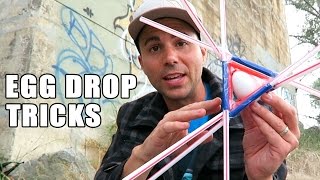
Short Summary
Main recommendation: there's no single best egg drop design because competition rules vary; Mark presents five builds and explains the physics (reducing speed and stretching impact time) behind why each protects the egg. The video presents five builds (popcorn ball, straw pyramid, balloon airbag, power-descent balloon rig, and a near-neutrally-buoyant balloon cradle) and explains the physics behind why each one protects the egg.
Key Points
- The physics framing: the egg's drop energy starts as potential energy (height) and converts to kinetic energy (speed); the eggshell's binding energy is the threshold it can absorb before cracking.
- Reducing the peak is the first lever: a parachute or any drag-producing device slows the fall, so less energy must be absorbed at impact.
- Stretching the impact over time is the second lever: a longer impact duration spreads the force, which is why cushioning, car airbags, sand landings, and rolling after jumps all work.
- Rules decide the winner: some competitions ban popcorn or parachutes, reward the smallest or lightest build, or restrict materials, so the best design depends on the scoring criteria.
- Several builds work by letting the energy break parts of the structure instead of the egg; the video notes that broken straws absorb energy that would otherwise reach the shell.
Details Worth Noting
- Concrete instructions:
- Popcorn ball: place the egg in the center of a ball-shaped container filled with cushioning such as bubble wrap, packing peanuts, or popcorn; a ball is more weight-efficient than a box because it has no unnecessary corner cushioning, and its stretch helps absorb energy.
- Parachute: cut up a trash bag, attach a little string, and tape it together; the bigger the parachute, the better, and it does not need to be fancy.
- Straw pyramid: use stiff straws (the speaker used Wendy's straws, which needed fewer), build a triangular pyramid of six straws, then join two straws into a "mega straw" and reinforce with wide tape; make six mega straws and tape one to each pyramid edge, with the egg in the middle and no straw pointing directly at it.
- Balloon airbag: cradle the egg in four barely inflated small balloons, then wrap it in larger balloons tied with string and tape, filling gaps by taping balloons to the string; add a parachute if the rules allow.
- Power-descent balloon rig: the speaker proposed balloons that deflate to provide upward thrust before landing, but the transcript cuts off before detailing this build.
- Near-neutrally-buoyant cradle: buy a few more balloons than needed and pop them until the rig is just under neutrally buoyant; the speaker used small animal balloons around the egg, producing a build of a couple of ounces.
- The straw pyramid egg broke after about 20 tries, though Mark notes the broken straws absorbed energy that helped protect earlier eggs.
- The speaker recommends the balloon-cradle approach for lighter-weight competitions and the popcorn-ball or parachute options when the egg just needs to survive; the "Airwolf" build is suggested for smallest-wins rules, with the transcript giving no further description of it.
- Mark mentions putting an egg in peanut butter is a popular but not very good idea compared to a popcorn ball.
Bottom Line
Pick the build based on your competition's scoring and banned materials, then combine slowing the fall with stretching the impact time, since those two levers explain why each design works.