 digest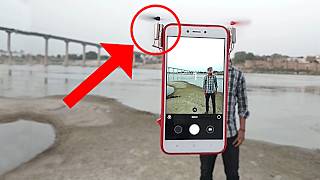
Short Summary
Main recommendation: Treat the viral "flying selfie phone case" video as a staged fake, and if you want to build a real one, use a multi-rotor design with a gyroscope and accelerometer flight controller, not a fixed two-propeller bi-copter. The video is framed as a scam because the creator includes Amazon affiliate links in the description, potentially profiting off aspiring engineers who might try to replicate the fake build.
Key Points
- The motors shown (3-volt, 7-millimeter micro brush motors) can lift only about 30 grams at full throttle, while the phone rig weighs roughly 300 grams, so the setup as shown cannot fly.
- Physics problems include a tilted rotor thrust that would push the phone forward, and a control board with no gyroscope or accelerometer, so it cannot detect tipping.
- Rigidly taping the motors to the case removes any way to self-correct orientation, so the phone would nosedive.
- Captain Disillusion identified visual evidence of faking, including a mask over the phone, a visible rod, and reused motor audio.
- A working prototype built with Peter Sripol did fly (if wobbly, partly due to wind), after calibration flights, using a bi-copter design, which the video notes is less stable than a quad-copter.
Details Worth Noting
- Concrete instructions: To build a working version, the video's parts list was two brushless motors, two electronic motor speed controllers, a flight controller with an integrated gyroscope and accelerometer, a 3D-printed frame, two servos to articulate the rotors, a radio transmitter for remote control, and a four-cell LiPo battery. Assemble them, then run test flights and tweak the control loop's response sensitivity between flights until the drone is neither under- nor over-compensating when it tips. Size the motors properly for the load, since correctly sized motors can lift about 150 quarters versus about 6 quarters for the fake setup. For stability, the video recommends a quad-copter layout instead of a bi-copter.
- The video notes a helicopter-style hover requires the craft to be level, since tilting creates an unbalanced forward thrust.
- The fake video's audio is a single reused motor recording, so the sound was not captured at a distance.
- Mark Rober called the knee brace phone-charging and flashlight system from the same creator also unworkable as shown.
Bottom Line
The viral video is a fabrication that breaks basic physics, and the only functional version the creators built needed proper components, control calibration, and a more stable design to fly.




