 digest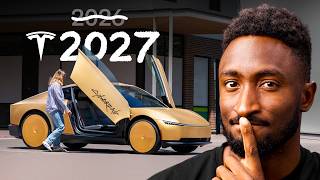
Short Summary
Main recommendation: He bet that a no-steering-wheel, no-pedal robotaxi Cybercab will not ship to regular buyers for $30,000 before the end of 2026, because the required steps (full self-driving, legislation, and affordable pricing) are all very difficult. The speaker frames his own bet as a "shave my head on camera" wager and challenges skeptics to take the opposite side. He also argues that Tesla's habit of announcing products far ahead of their readiness mirrors Google Glass.
Key Points
- The speaker's bet is that the promised $30,000 Cybercab will not reach regular buyers before the end of 2026, and he would shave his head on camera if it does.
- Full self-driving must be solved first, and even experts disagree on what "solved" means, including acceptable failure rates and operating conditions.
- Legislation allowing sale of a vehicle with no steering wheel and no pedals to private owners is likely a problem as hard as the technology itself.
- Concept cars frequently lack side-view mirrors, but production versions in the US always include them, illustrating how slowly regulations and safety standards move.
- Tesla's current cheapest Model 3 costs about $35,000, so the speaker considers the $30,000 price target possibly achievable but still challenging.
- Tesla's robotaxi event in Austin, Texas on September 3, 2026 was small, invitation-limited (no journalists), and announced that the Cybercab joins the existing robotaxi service in geofenced areas.
Details Worth Noting
- Concrete instructions: The speaker gives no step-by-step consumer instructions. The only actionable advice is for skeptics: take the opposite side of the bet, tag him if you accept, and note that the timeframe is three months to prove him wrong. He offers that if he loses, he will shave his head on camera and donate to cancer research.
- The Cybercab was unveiled as a two-seater with butterfly doors, no steering wheel, no pedals, and no charge port, designed to join a self-driving fleet and earn money for its owner.
- At the Austin event, robotaxis were visible throughout the geofenced area, and a colored LED light was added to the front so riders can identify their vehicle.
- The speaker notes that the butterfly doors open wide into traffic, which he questions for use in places like New York City.
- The Robovan, a 20-seat transportation pod, was announced last year and is still listed on Tesla's website as "arriving soon."
- The Google Glass comparison: early enthusiasts ("Glassholes") promoted the product, but the technology was not ready, and about 10 years later many major tech companies are now making smart glasses.
Bottom Line
The speaker's prediction holds that a $30,000 Cybercab reaching ordinary buyers in 2026 is very unlikely, given the stacked technical, legal, and cost hurdles, while he still considers the concept interesting and expects similar products to appear over the next decade.


