digest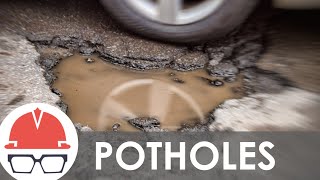
Short Summary
Main recommendation: Prevent potholes by sealing cracks in asphalt pavement regularly, since water entering cracks is what weakens the subgrade and starts the failure process. The video explains that this maintenance, balanced against the high cost of thicker or more durable pavement, is the practical way to extend asphalt roadway life. Potholes form when water softens the soil beneath the road, traffic erodes it further, and the pavement eventually breaks.
Key Points
- Asphalt roads are typically a base course of angular rock with a layer of asphalt concrete on top, a design the video says balances cost and durability.
- Cracks are the first failure point because they let water in and allow it to escape, carrying soil particles out from below the pavement.
- Traffic pumps water in and out of the softened subgrade, creating a positive feedback loop that removes support until the pavement breaks.
- Freeze-thaw cycles worsen the problem: ice lenses form under the pavement and leave voids when they thaw, which is why potholes are worst in cold climates during spring thaw.
- Potholes cause billions of dollars in vehicle damage and create safety risks when drivers swerve or when bikes, motorcycles, and scooters hit them.
- Pothole repairs replace lost soil and pavement and try to seal out water, but they often fail to fully connect with the surrounding road, so potholes recur in the same spot.
Details Worth Noting
- Concrete instructions: The video gives no step-by-step procedure for a homeowner or driver. The actionable guidance is for road owners: seal cracks in asphalt pavement regularly to keep water out, and treat sealing as the main ongoing maintenance that extends pavement life for many years.
- Thickness trade-off: Adding even one centimeter of pavement across a large area can mean millions of tons of additional asphalt, so agencies weigh original paving cost against lifetime maintenance cost.
- Concrete alternative: Many highways use concrete for greater durability, but the cost trade-offs of design choices like this are the central engineering consideration.
- Repair limitation: Because a pothole repair is described as a bandage that does not always create a perfect connection to the surrounding roadway, sealing the repair edges is critical but harder to do.
- Who pays: Pavement is one of the highest-value assets owned by cities, counties, and DOTs, and road condition reflects how much of tax revenue is budgeted to streets.
Bottom Line
Potholes are a predictable result of water getting into cracks, so consistent crack sealing is the most cost-effective way to slow them, while the frequency of freeze-thaw cycles and traffic loads determines how quickly they appear.