 digest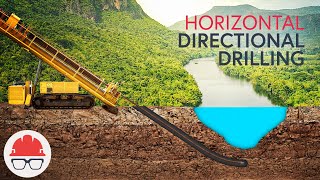
Short Summary
Main recommendation: For installing pipelines or utilities under roads and rivers with minimal surface disruption, horizontal directional drilling (HDD) is generally a more environmentally favorable method than trenching, when site conditions allow. The video explains how HDD works, using the Fort Lauderdale sewer project (about 7 miles, completed in under a year and a half) as its example. It also notes that HDD is not appropriate for every project, citing difficult geology and drilling fluid spills.
Key Points
- Trenching is highly disruptive: it requires road closures, detours, pavement repairs, worker-protection shoring, and is often impractical in sensitive environmental areas because of permit requirements.
- HDD starts from the surface with a small pilot hole, so it avoids digging large entry and exit pits, and it can cross under roadways and waterways.
- Drilling fluid (mud or slurry, typically water plus bentonite clay) cools and lubricates the bit, carries cuttings out, and stabilizes the borehole against collapse, especially in sandy soils.
- Steering relies on an asymmetric (bent) bit: rotating the drill string ("clocking") and then advancing it changes the direction of the borehole.
- Location is tracked with a walkover locating device (a transmitter behind the bit read by a handheld receiver) or wireline or gyro systems.
Details Worth Noting
- Concrete instructions:
- Drill a pilot hole first, adding drill pipe segments as the bit advances.
- Pump drilling fluid through the drill string so it returns to the entry pit carrying cuttings; store it in a tank or containment pit for disposal or reuse.
- Check the bit's location regularly with a locating device, then adjust steering by rotating the string to the desired clock position and advancing it.
- For rocky ground, use a downhole hydraulic (mud) motor, whose bent housing provides steering bias, instead of rotating the whole string.
- After the pilot hole exits, ream it in one or more steps by pulling a reamer back toward the rig; the final reaming is combined with the pullback, where the pipe is attached to the assembly and pulled through the enlarged hole.
- The Fort Lauderdale project replaced a sewer line after December 2019 ruptures released raw sewage; it crossed three rivers.
- Mariner East 2 (Pennsylvania, 2017–2022) had inadvertent returns of drilling fluid on HDD segments, causing water quality problems, sinkholes, and spills into sensitive areas; its owner was fined more than $20 million for permit violations. The video notes most of these spills were partly related to Pennsylvania's difficult geology.
Bottom Line
Horizontal directional drilling can route utilities beneath roads and rivers with far less surface disruption than trenching, but its success depends heavily on geology and careful drilling-fluid management, as the Mariner East 2 problems show.



