 digest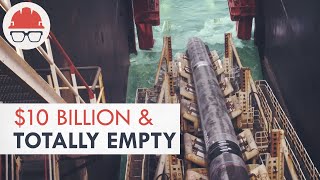
Short Summary
Main recommendation: The video's central conclusion is that Nord Stream 2 is an engineering achievement whose future is now effectively blocked by geopolitics, since Germany halted certification after Russia's invasion of Ukraine and the project's operator became insolvent. The video describes how the twin pipelines were built along the Baltic Sea floor, then explains why the politics around the project overshadowed the engineering.
Key Points
- The project is a pair of 1,230 km (764 mile) natural gas pipelines running from near St Petersburg, Russia, to Greifswald, Germany, crossing the territorial waters or economic exclusion zones of five countries (Russia, Germany, Finland, Sweden, and Denmark).
- Construction began in 2016 and finished at the end of 2021, but the project was opposed from the start over climate concerns and fears it could be used as a geopolitical weapon.
- The U.S. imposed sanctions on the pipeline's operating company and senior officers; the project website went offline and most employees were fired or quit.
- Most non-Russian companies involved have written off their investments, and the operating company is reported to be insolvent, with the $10 billion project unable to be used.
- Construction required an environmental review of the Baltic seabed, with unexploded munitions from World War 1 and 2 either routed around or detonated in place under bubble curtains to limit noise impacts on marine life.
Ranked list promised by the title (2 items): The title does not promise a numbered list, so no numbered list is included.
Details Worth Noting
- Concrete instructions: The video gives no actionable advice for viewers. Its technical content describes how the project was built, including: steel plates rolled into pipe sections and welded; an interior epoxy coating to reduce pressure losses and an exterior coating against saltwater corrosion; a concrete weight coating (doubling each pipe from 12 to 24 metric tons) to resist buoyancy and currents; double-joint welding on pipelay vessels with inspection at each stage; heat-shrink sleeves and polyurethane foam at welds; rock and gravel placed by fallpipe vessels where the seabed was rough; and above-water tie-ins, each taking about three weeks, to join pipe sections.
- Production scale: More than 200,000 pipe sections of about 1,150 mm (45 inches) diameter and 12 m (40 ft) length were needed, an average of nearly 100 per day across three suppliers.
- Pipeline inspection gauges (PIGs) are launched from Russia and pushed by gas pressure over the full journey, scanning for corrosion or mechanical damage and recording data retrieved in Germany.
- Germany planned to close its last three nuclear plants by the end of 2022, using natural gas as a bridge to wind and solar expansion.
- The pipeline would let more Russian gas bypass Ukraine, depriving it of transit fees.
Bottom Line
The engineering of Nord Stream 2 was completed, but the project now sits unused because of the political and sanctions fallout from the Russian invasion of Ukraine.



