 digest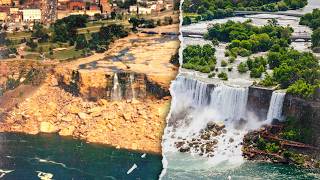
Short Summary
Main recommendation: Niagara Falls is best understood as an engineering system, not just a tourist attraction, because the same 50-plus-meter drop that makes it scenic also forced the Welland Canal, enabled early hydroelectric power, and required carefully managed water diversion. Each piece of infrastructure exists because of the escarpment's elevation drop and the Niagara River's flow. The video traces how shipping, power generation, and falls preservation are all tied together by that single geological feature.
Key Points
- The Niagara Escarpment created a natural bottleneck between Lake Erie and Lake Ontario, forcing freight to be offloaded and portaged, which made a bypass canal necessary.
- The Welland Canal first connected the two lakes for shipping in 1829 and uses eight locks to overcome the elevation difference, with the first lock acting as a control lock that regulates the level of the downstream canal during high lake levels or wind storms.
- The Adams Power Plant opened in 1895 using Westinghouse AC generators based on Nikola Tesla's ideas and patents, starting at about 40 megawatts; the combined regional capacity is now roughly 5 gigawatts.
- Tunnels divert 50 to 75 percent of the Niagara River's flow to 39 turbines, with the diversion ratio controlled under a treaty between the US and Canada to balance tourism and power demand.
- Water diversion slows erosion of the falls from about 3 feet per year to roughly 1 foot per year, helping preserve them longer.
- In 1969, the Army Corps of Engineers built a temporary cofferdam to dry the American Falls to assess talus stability, then decided to leave the talus in place and removed the cofferdam.
Details Worth Noting
- Concrete instructions: The video gives no step-by-step procedure for a viewer to follow. The only actionable guidance is the engineering decision-making it describes: when water is diverted for power, more flow goes over the falls during the day in peak tourist season and more is diverted at night and in winter; pumped storage plants pump water into reservoirs at night using surplus electricity and release it during the day; and when officials studied the American Falls' talus pile, the chosen course was to leave most of it in place rather than remove it.
- The Welland Canal is shared by both canal sections: the original route passes through the town of Welland, while the Welland Bypass runs east of it, and both cross an aqueduct over the Welland River.
- Overall flow over the falls during full-tourist daytime operation is only about 50 percent of the river's total flow.
- The international control dam does not span the full river; the shallow US side acts like an uncontrolled spillway, while adjustable gates on the Canadian side balance flow between the falls and the hydropower intakes.
- Enormous steel tunnel gates, nearly 60 feet tall, can drop into the diversion tunnels to shut off flow for inspection and maintenance.
Bottom Line
Niagara Falls shows that a single natural feature, a large drop in a large river, can drive shipping infrastructure, hydropower, and conservation decisions at the same time, and that managing that feature often means balancing competing demands through careful engineering and treaty-based control.



