 digest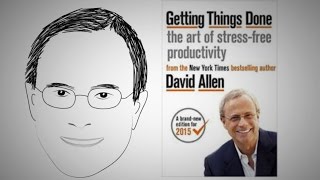
Short Summary
Main recommendation: Build a trusted external system, following David Allen's Getting Things Done (GTD), by consistently performing three habits, capturing, processing, and reviewing, so your brain stops holding unfinished items. The speaker argues this relieves mental clutter and lets you stay fully present, effective, and creative. The approach is presented as a discipline of routines rather than a shortcut.
Key Points
- Your brain is for having ideas, not holding them; unresolved "could do, should do, or agreed to do" items keep running in the background and drain attention.
- Capturing means getting every intention out of your head immediately, in any setting (for example, a waterproof notepad in the shower or voice recording via Siri while driving), in raw form without needing to be a good idea.
- Processing means reviewing captured items, deciding whether to act, converting each into a clear next physical action and desired outcome, and filing it correctly.
- Reviewing means a weekly top-down check of your system so it stays current and trustworthy.
- The speaker says the GTD system is "damn hard" to trust and admits struggling for years before rereading the book and committing to these habits.
Details Worth Noting
- Concrete instructions:
- Capture everything you feel you should remember or want to do immediately into an inbox; use whatever tool fits the moment (waterproof notepad, phone voice recording).
- Schedule a daily processing appointment (the speaker uses 4 p.m.). For each captured item, ask "Do I want to act on this?" Default to no. Non-actionable items go to a "someday/maybe" or reference folder; check those once a month or once a quarter.
- For items you want to act on, convert each into a next action and a desired outcome. Examples from the video: "budget meeting" becomes "draft thoughts for the budget meeting agenda"; "filing system" becomes "talk to Angela about the filing system we need to set up."
- If the outcome needs multiple actions, add it to a project list (e.g., "bathroom renovation" alongside the next action "drive to Home Depot and buy new cabinet handles").
- Ask whether each next action takes 2 minutes or less; if so, do it now. Otherwise place it in the calendar (time-specific), the next action list (as soon as possible), or the follow-up list (delegated or awaiting information).
- When the next action list exceeds about 30 items, split it into context lists such as "at home," "at office," "at grocery store," or "at computer."
- Schedule a weekly review (the speaker uses Fridays at 3 p.m., 45 minutes). Work top-down: ask what you want your typical day to look like 3 to 5 years out, which projects support that vision, and which next actions are critical to those projects. Then update the calendar, prioritize lists, and clear old items.
- Do the weekly review in the same place and time each week, and pair it with a small reward you have only during the review (the speaker mentions a chocolate bar, milkshake, or nice lunch).
- The speaker says that most organizing systems fail because the stuff being organized was never fully transformed into actionable items; until then, it remains uncontrollable.
- The speaker frames the three habits as "CPR" (capturing, processing, reviewing) that must be performed consistently to keep the system alive.
- The speaker credits David Allen's over 30 years of executive coaching and cites cognitive science as support, though no specific studies are named in the transcript.
Bottom Line
A trusted external system only works when capturing, processing, and reviewing become routine habits; once you do them consistently, your mind can stop holding unfinished tasks and focus on the present.
