digest
Short Summary
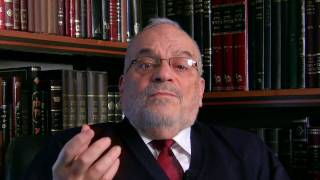
Main recommendation: Rabbi Daniel Rowe asks listeners to answer the demonization of Jews, which he calls humanity's oldest hatred, by "shining more light" through committing more deeply to life, peace, love, and rebuilding, and by passing that commitment to their children. He frames this as the way to honor the memory of the Holocaust's victims on Yom HaShoah, Holocaust Memorial Day.
Key Points
- Rowe distinguishes anti-Semitism's persistent form, demonization, from ordinary bigotry: the Jew is not called inferior but evil, whether the target is the Jewish religion, the Jewish race, or the Jewish nation state.
- He traces how demonization took hold in Germany in the early 1930s through the legal profession and universities, which blamed Jews for wartime horrors, boycotted Jewish professors, and cast Jews as guilty.
- He notes that such moralized hatred can persist even among people who believe they do not hate Jews, and that it can appear in any society.
- He stresses that his grandparents' generation did not define themselves as victims and rebuilt after the Holocaust, rather than dwelling on it.
Details Worth Noting
- Concrete instructions: Rowe gives no step-by-step steps, but his actionable guidance is to confront darkness by "shining more light," to respond to war with a deeper commitment to peace, to respond to hatred with a deeper commitment to love, and to rebuild rather than remain in the role of victim. He asks that this commitment be passed on to one's children.
- His grandfather left Germany in the early 1930s, when most people assumed the anti-Jewish climate was "just a phase."
- Rowe's wife's grandmother was deported from Hungary in 1944 to Auschwitz on a train with hundreds of relatives, most of them from the same village. Within half an hour to an hour of arrival, she was one of only three people still alive from that train carriage.
- He says his grandparents did not talk much about the Holocaust until much later in life.
- The video is a short personal reflection tied to the Holocaust Memorial Day observance, with candles lit "in memory of the Six Million."
Bottom Line
Rowe's central message is that remembering the Holocaust means choosing active, constructive commitment to light, love, and building a better world rather than framing Jewish identity around victimhood.