digest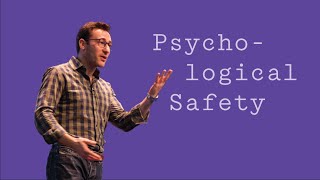
Short Summary
Main recommendation: Leaders should create an environment of psychological safety, in which people feel free to be themselves and work at their natural best, rather than trying to "get the most out of" their people through control. The speaker illustrates this with a barista named Noah at the Four Seasons in Las Vegas who said he loves his job because managers ask what he needs, unlike at his other job at Caesars Palace where managers catch mistakes.
Key Points
- Psychological safety is presented as the central concept: people can feel safe at work even when physical hazards exist.
- The speaker distinguishes "like" (rational) from "love" (emotional), and uses the barista's "I love my job" as evidence of an emotional connection to work.
- The same person behaves very differently across two workplaces, showing that leadership culture, not the individual, drives the experience.
- Good service comes from people who want to give it, not from people who are forced to; the speaker says people can tell the difference.
- The same principle applies to any profession, such as police officers, who can perform well or poorly depending on their agency's culture.
Details Worth Noting
- Concrete instructions: The speaker gives no step-by-step method, but the actionable approach he describes is for leaders to give people agency and control over how they do their job, check in to offer guidelines and support without doing the work for them or over-controlling, and ask managers to proactively offer help (for example, asking "is there anything I need to do my job better?") rather than only correcting mistakes.
- The Four Seasons example: managers of any level walk through the halls asking staff if there is anything they need, and this is what the barista credits for feeling he can "be myself."
- The contrasting example: at Caesars Palace, managers "just catch us when we're doing things wrong," and the barista said he keeps his head below the radar to get through the day.
- The speaker notes that the better leadership question is "How do I create an environment in which my people can work at their natural best?" rather than "How do I get the most out of my people?"
- The speaker argues that asking how to get the most out of people is flawed because "people aren't a towel; you don't ring them out."
Bottom Line
Whether people thrive depends less on who they are and more on whether leaders deliberately build a workplace where employees feel trusted, supported, and free to do their best work.