digest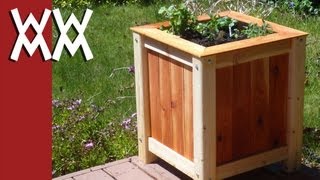
Short Summary
Main recommendation: Build a simple outdoor planter box from pine 2x4s, 2x3s, and redwood bender board garden edging instead of buying an expensive cedar, redwood, or teak box, for about $20 in materials. The build is basically a frame of corner posts and rails with slatted sides and a loose slatted bottom, assembled with glue and quarter-inch lag screws.
Key Points
- Cost is the main reason for the approach: the creator says expensive woods like cedar, redwood, or teak hold up to weather but cost much more, and that a pine version can simply be rebuilt if it rots in a few years.
- Materials total about $20.99: $13.35 for lumber and $7.64 for hardware.
- The bender boards are sold in the garden department of home centers and lumber yards and are used as garden edging.
- Gaps between slats are intentional, allowing water to drain and the wood to expand.
- The bottom slats are not fastened; the weight of the soil holds them in place.
Details Worth Noting
- Concrete instructions:
- Materials: two 2x3s, two 2x4s, and five redwood bender boards.
- Cut two 2x4s in half and glue them together to form the four corner posts. Flattening or jointing is optional since the boards are already flat enough.
- Cut the 2x3s into 18 3/4-inch lengths (eight pieces), square them on a table saw, then cut each in half for four pieces; after test-fitting, he trimmed them down to a smaller size he liked better.
- Assemble the base: place the notched pieces with the thinner part toward the front, use a spacer and a 3/4-inch plywood piece to set the height at the halfway mark, line up the parts, and clamp temporarily.
- Drill pilot holes through the clamped joint, using a mark on the cross piece to reach deeper for the 4-inch lag screws. Use quarter-inch lag screws, 4 inches long.
- He initially tried lag screws alone, found the joint wobbly, and decided to add glue as well.
- Slide slats into the grooves on each side, leaving small gaps. Notch the corners of two bottom slats so they fit over the posts, then rest the remaining bottom slats on the ridge.
- Cut bender board at 45-degree angles and tack it over the tops of the posts and rail to finish.
- Design alternatives: the posts could be extended with a wooden finial on top; the grooves can be skipped by screwing slats directly into the back of the 2x3s; lag bolts can be covered or omitted; the whole thing could be glued instead.
- The creator notes that the project required fussing to fit the slats into the grooves.
Bottom Line
This is a low-cost, rebuildable pine planter box that trades longevity for affordability, with simple construction and several optional design changes.