 digest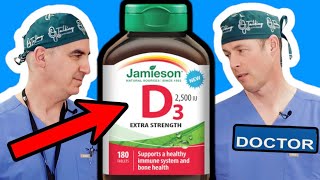
Short Summary
Main recommendation: Take vitamin D, which the hosts call one of two supplements you should definitely take (the other being B12), mainly for bone health and to avoid deficiency. The video also links low vitamin D to immune function, heart disease risk, and mood, while noting that the evidence for supplementing to prevent these outcomes is weaker than for bone health.
Key Points
- Bone health is the strongest evidence-backed reason to take vitamin D, supporting both prevention and treatment of osteoporosis.
- Low vitamin D levels, rather than high levels, are associated with higher risk of infections; vitamin D may reduce severity of flu and COVID-19 but probably does not prevent infection.
- Low vitamin D is associated with heart attack, stroke, diabetes, and high cholesterol, but the speakers say supplements have not been shown to reduce these risks in people who are not deficient, and confounding factors are likely.
- Low sunlight exposure at northern latitudes, indoor living, clothing, and darker skin tone all raise deficiency risk, so sunlight alone may not keep levels adequate in places like Canada.
- Deficiency symptoms include fatigue, achy muscles, and bone pain, and in severe cases easy or low-impact fractures; the hosts link vitamin D deficiency to rickets, mainly seen in developing countries among exclusively breastfed babies.
Details Worth Noting
- Concrete instructions:
- Consider taking vitamin D as a supplement. The speaker says he personally takes 2,000 international units (IU) daily.
- Typical dosages discussed range from about 600 to 2,000 IU, though some people take 4,000 to 10,000 IU without good supporting evidence.
- Do not assume that megadoses (for example, 4,000 to 10,000 IU reported in online accounts) are beneficial; the speaker says there is not good supporting evidence for them, and this is still being researched.
- Talk to a healthcare provider before starting a supplement, since a prescribed deficiency dose may differ.
- Consider testing for low vitamin D, especially if you have other medical conditions, and ask your family doctor to keep it in mind.
- Do not try to get vitamin D by unsafe sun exposure; the speaker jokingly warns against removing clothes to walk outside.
- Vitamin D is fat-soluble, so excess can be stored in fat and may lead to toxicity, unlike water-soluble vitamins such as C and B, which are excreted in urine.
- Vitamin D is measured in international units (IU).
- The hosts note that the vitamin D and mood/depression association may be tied to seasonal affective disorder (SAD), linked to lack of natural light.
- The video is a general-information discussion by two physicians and does not constitute individual medical advice.
Bottom Line
Vitamin D is most clearly justified for bone health, and low levels are worth checking for given their links to infection severity, heart disease, and mood, but supplementing above a normal level is not shown to add benefit.



