digest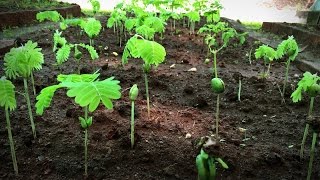
Short Summary
Main recommendation: Build a small, dense, native "Miyawaki-style" forest in your backyard by working with nature's own processes rather than against them, starting with soil preparation, layered native planting, and mulching. The speaker, an industrial engineer turned forest-maker, says his method can produce a forest that would normally take about 100 years in roughly 10 years. Built this way, the forest can regenerate itself and eventually needs little or no management.
Key Points
- Native species are defined as whatever grew there before human intervention; the speaker identifies them through national park surveys, sacred groves, museum seeds or wood samples, and old paintings, poems, and literature.
- The forest is built in four vertical layers (shrub, sub-tree, tree, canopy), with the percentage of each species adjusted to the goal, such as fruit, flowers, birds or bees, or a wild evergreen forest.
- Microorganisms are added to soil instead of direct chemical nutrients, because they produce nutrients naturally by feeding on mixed-in biomass.
- Planted saplings grow as a collective; planting the same species independently would not grow as fast.
- Once dense, the canopy blocks sunlight, suppresses weeds, and retains moisture, so watering can be gradually reduced and then stopped.
Details Worth Noting
- Concrete instructions:
- Test the soil by touching, feeling, and tasting it to identify what it lacks.
- If soil is compact and water cannot seep in, mix in local biomass to make it more porous.
- If soil cannot hold water, mix in a water-absorbent material such as peat or bagasse so it stays moist.
- If soil lacks nutrition, add microorganisms rather than direct nutrients, then let them feed on the mixed-in biomass.
- Survey native tree species for the location and collect their seeds, then germinate saplings from them.
- Divide chosen trees into four layers (shrub, sub-tree, tree, canopy), fix each layer's ratio, and set each species' percentage in the mix (raise fruit-bearing trees for a fruit forest).
- Do not plant trees from the same layer next to each other, since they compete for vertical space as they grow tall.
- Plant saplings close together and spread a thick layer of mulch on the surface to keep soil moist in heat and let it breathe in frost.
- Water the forest for the next two to three years while removing weeds so all water and nutrients go to the trees.
- Gradually reduce and then stop watering once the canopy is dense and the floor stays moist without it.
- The speaker says roots reach about one meter deep in the first three months, forming a mesh of roots with microbes and fungi that moves nutrients to trees.
- Mushrooms appearing overnight after rain is cited as a sign of a healthy fungal network below.
- The speaker has made 75 such forests in 25 cities worldwide, for factories, farms, schools, homes, resorts, apartment buildings, public parks, and a zoo.
- Once established, the forest is expected to regenerate itself indefinitely, so no management is the best management.
Bottom Line
A dense native forest can be established in a small backyard in about a decade by rebuilding soil life, planting in layers, and letting the trees support each other until they need no care.