digest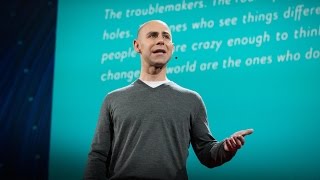
Short Summary
Main recommendation: To be more original, start quickly but finish slowly, doubt your ideas instead of yourself, and generate many ideas, since originals tend to produce many bad ideas before a few good ones. Adam Grant draws on his research on "originals," nonconformists who champion new ideas, and reports that moderate procrastination, productive doubt, and high idea volume are linked to creativity.
Key Points
- Procrastination can boost creativity: in Grant's experiments, moderate procrastinators (given Minesweeper for 5 or 10 minutes after learning the task) generated ideas rated 16 percent more creative than the other groups, because the task stayed active in their minds.
- Self-doubt paralyzes, while idea doubt energizes; the key is to replace "I'm crap" with "The first few drafts are always crap, and I'm just not there yet."
- The first-mover advantage is mostly a myth: in a study of over 50 product categories, first movers had a 47 percent failure rate versus 8 percent for improvers, so being different and better matters more than being first.
- Fear of failing to try is the bigger regret; Grant notes that most people stayed silent rather than share their best ideas, fearing embarrassment, while originals accept many bad ideas.
Details Worth Noting
- Concrete instructions:
- Start the work early enough to get the task rolling, then deliberately step away from it (for example, a short distraction of 5 to 10 minutes) so the problem keeps incubating in the background; the effect did not appear when the game was played before learning the task.
- When you feel doubt about an idea, treat it as idea doubt: test, experiment, and refine rather than concluding you are not capable.
- Question defaults and look for better options; Grant's browser study linked users who chose Firefox or Chrome over preinstalled Internet Explorer or Safari to better job performance and retention (15 percent longer tenure), suggesting the value lies in actively doubting the default.
- Generate many ideas: the more compositions classical composers produced, the better their odds of masterpieces; Warby Parker tested over 2,000 possible names before settling on Warby Parker.
- Grant's Warby Parker anecdote: he declined to invest seven years ago, and the company was later valued at over a billion dollars and recognized as the world's most innovative company.
- Examples of originals who procrastinated: Leonardo da Vinci worked on the Mona Lisa on and off for 16 years, and Martin Luther King Jr. left his prepared script on the March on Washington to say "I have a dream."
- Grant's "vuja de" concept means seeing something familiar with fresh eyes; screenwriter Jennifer Lee reinvented the villain in a long-stalled script, and the result was Frozen.
- Grant's caveat: the browser finding is a correlation about initiative, not a technical advantage, since typing speed and computer knowledge were similar across groups.
Bottom Line
Originality comes less from genius than from habits: starting fast, tolerating doubt about ideas, questioning defaults, and producing a large volume of work, including many failures.