digest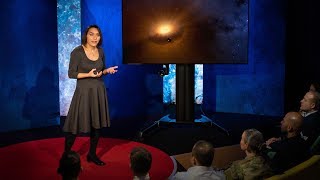
Short Summary
Main recommendation: The video's central answer is Sarah T. Stewart's new theory that the Moon formed inside a vaporous, spinning proto-Earth she calls a "Sonesta," rather than from debris ejected by a Mars-sized impact as in the classic giant impact theory. This explains why the Earth and Moon have identical isotopes, a fact the standard model struggled with.
Key Points
- The classic giant impact theory predicts the Moon is mostly made of the impactor, but the Earth and Moon share identical isotopes, which are described as their "genetic code."
- Stewart's team tried changing the spin of giant impacts to make the model work, and found that faster-spinning impacts can produce a disk of the same material mixture as the planet, but this was described as unlikely to happen by chance.
- Simulations showed that after many giant impacts, the young Earth would have no solid surface, only a deep gas layer getting denser with depth, closer to Jupiter than a rocky planet.
- A "Sonesta" (named after Hestia, the Greek goddess of the hearth and home, with "sone" meaning altogether) is a new type of object: a planet pushed past a spin-and-heat tipping point so its equator spreads into a disk.
- In the proposed model, the Moon grew from magma rain condensing out of rock vapor inside the Sonesta, then the Sonesta split into the two bodies, producing the twin Earth and Moon.
Details Worth Noting
- Concrete instructions: No step-by-step instructions, checklists, or actionable advice are given; the video is a scientific explanation of a research theory.
- The team's most powerful tools were lab impact experiments combined with computer simulations, which they used to test whether faster-spinning impacts could produce a Moon-like disk.
- Stewart describes the breakthrough as coming from setting aside old assumptions and "playing" with outrageous ideas, which took almost two years before the data made sense.
- The Sonesta is a transient state: after most giant impacts, these vaporous objects cool, shrink, and turn back into planets, possibly happening one or more times while rocky planets like Earth grew.
- The Moon could have orbited unseen inside the Sonesta for years and was revealed only as the object cooled and shrank; the Sonesta reverts to a planet only after cooling for hundreds of years longer.
Bottom Line
The Earth-Moon twin relationship may be explained not by a collision that spawned a separate Moon, but by a temporary, vapor-filled "Sonesta" stage in which the Moon formed inside the Earth itself.