digest
Short Summary
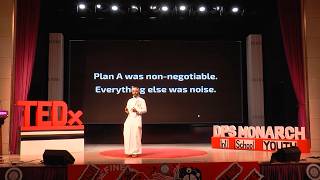
Main recommendation: Before teaching children, give them exposure to real professions, mentors, and expressive experiences so their ambition and confidence are built alongside their foundational learning, rather than only measuring marks and enrollment. The speaker, Isha Jauhar, argues this is what the Pchala program does, and that education systems should measure what children can do when they don't know, not just what they have learned.
Key Points
- Pchala began in 2009 when two management students started teaching a street child, AJ, on the pavement, later growing into a program through which over a decade or more more than 500 students have come, per the speaker.
- In 2011, a child enrolled in Class 4 dropped out within four months because he had only Class 1 foundational learning, which led the speaker's program to shift toward building an 18-to-24-month foundational bridge before school entry.
- COVID-era online schooling exposed that many children lacked devices and basic digital skills, prompting Pchala to reopen and bring back dropouts.
- The speaker observed that children's career aspirations clustered around only a few professions (doctor, soldier, teacher), which she framed as a "poverty of ambition" driven by limited reference points.
- Enrollment is high (95% of children aged 6 to 14), yet ASER data shows one in four Class 3 children can read a Class 2 text, and the speaker says no metrics measure confidence or exposure.
Details Worth Noting
- Concrete instructions: The transcript gives no step-by-step method for teachers or parents to follow. The actionable approaches it describes are the Pchala model components: (1) take children on exposure visits to science centers, museums, corporate offices, and cinemas as part of the curriculum; (2) connect children with professional mentors who share their career journeys in conversation, not formal interviews; (3) teach public speaking and self-expression as a core subject, including performing in front of large audiences; (4) include 21st-century skills such as AI, robotics, coding, and building LEDs and air conditioners; (5) use reverse mentorship, where students teach corporate adults; (6) after leaving the program, connect students to mentors in fields such as law, design, fine arts, and sports to build job readiness.
- Pchala's program ran for about one hour per day initially, with founders teaching after their own classes.
- A 2011 test case showed that enrolling children into a grade above their learning level led to dropout, so the speaker recommends foundational catch-up first.
- A former student, after a three-week global citizenship and youth leadership trip with 47 students from 13 countries, now creates a white cane for the blind community and a community waste management system, per the speaker.
- AJ, the boy from the opening story, completed school and college, returned to intern teaching at Pchala, and is now a bank associate.
Bottom Line
Children's learning should be judged by confidence, exposure, and the ability to imagine and navigate new situations, not by enrollment or exam scores alone.